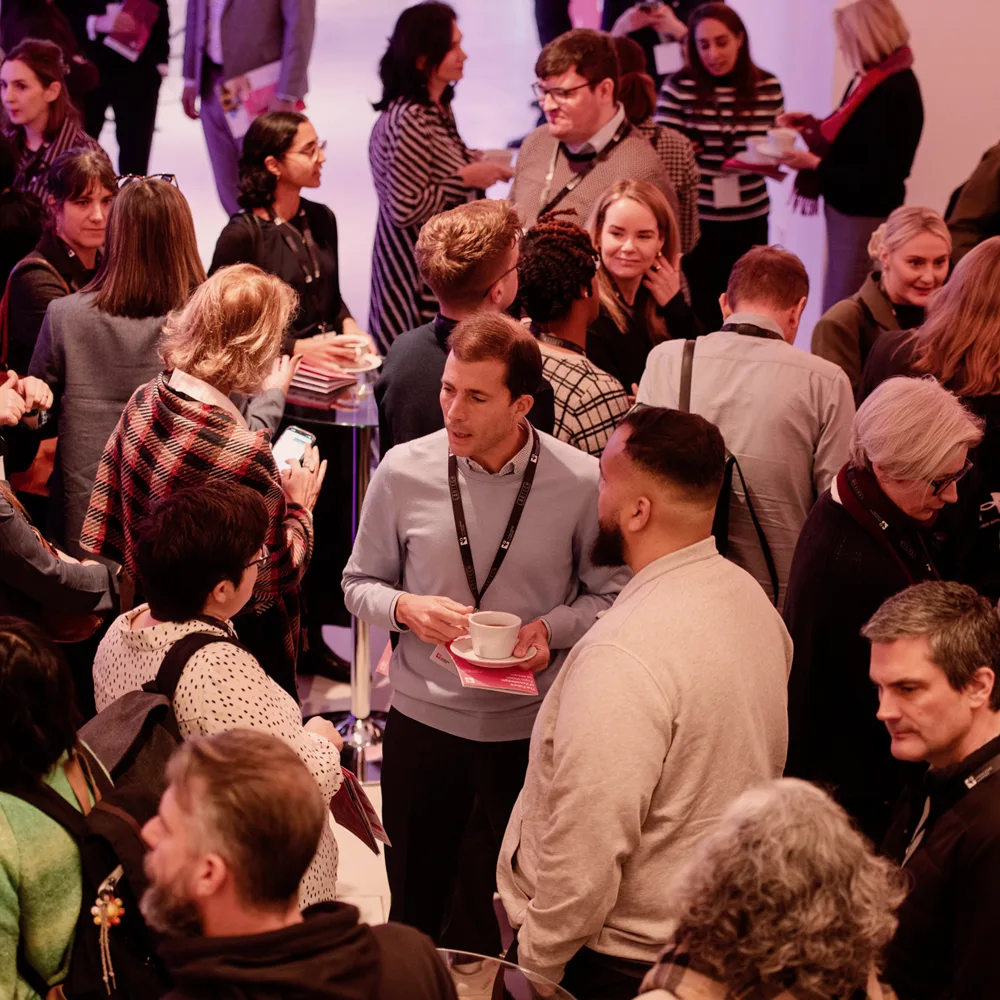
The Future of Knowledge is the Knowledge Quarter’s flagship annual conference, bringing the district’s world-class institutions under one roof to cut across silos and explore the future of knowledge and innovation.
One of the UK’s leading events focused on place-based innovation, it convenes senior leaders from academia, research, technology, life and physical sciences, culture, business and government, in the belief that innovation here isn’t sector based; it happens when different fields and life experiences meet. A geneticist, an archivist, an investor and a community organiser are often circling versions of the same problem, and the programme is built around exactly those overlaps, in curated cross-sector forums designed to forge new partnerships and open pathways for new areas of knowledge. The Future of Knowledge is where a decade of collaborative work comes together, and where we invite you to come and meet the makers advancing ideas, people and place.
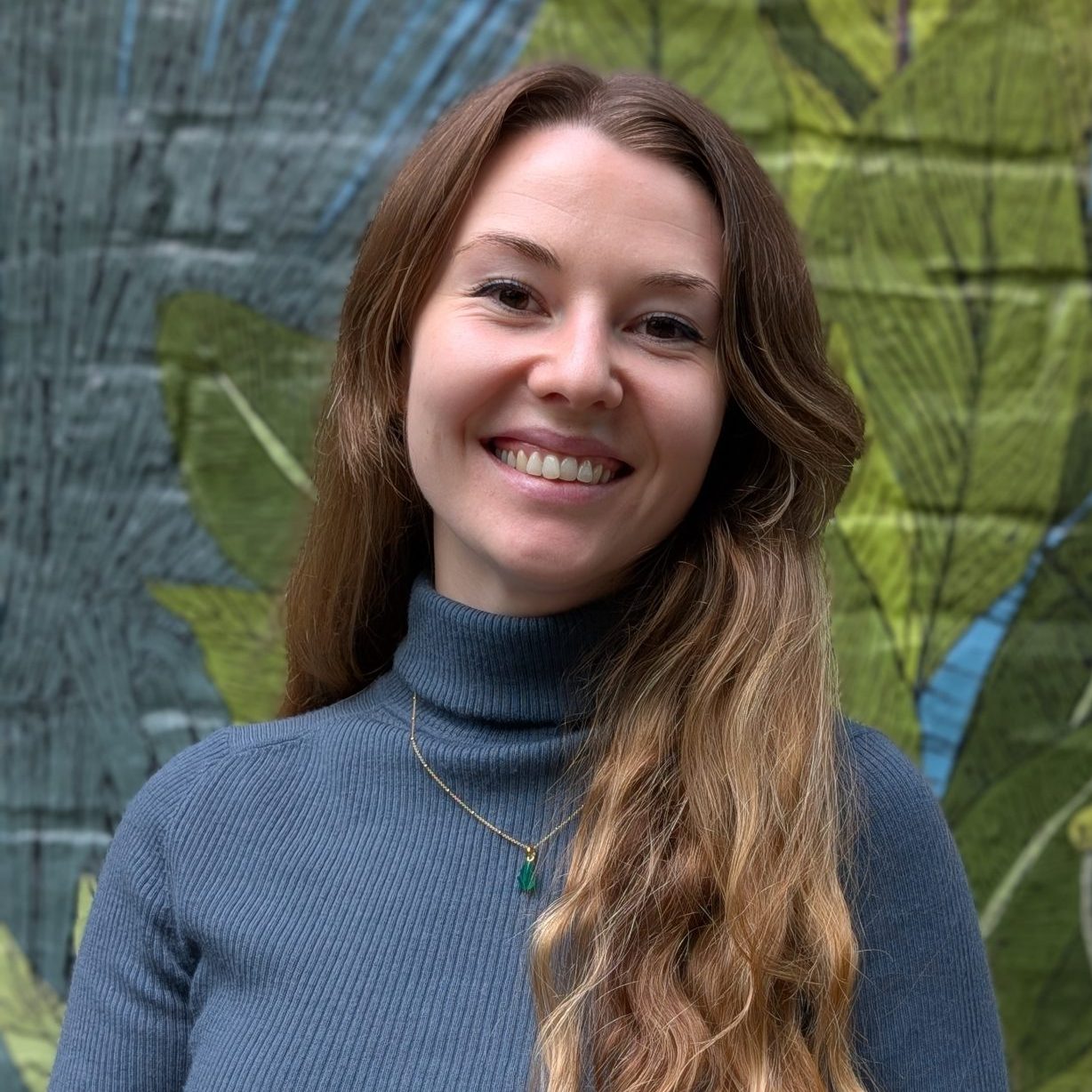
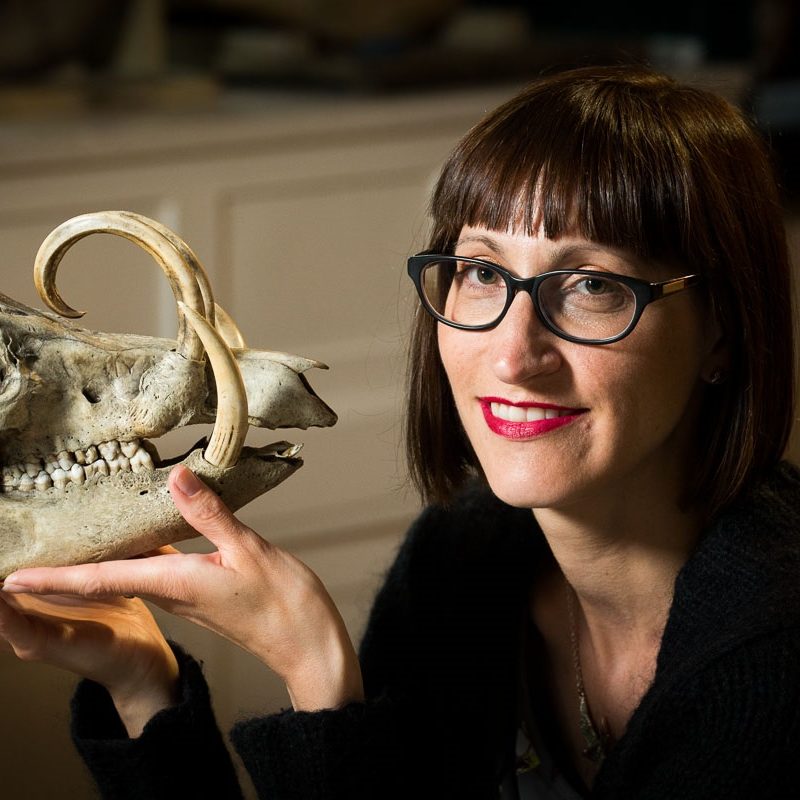
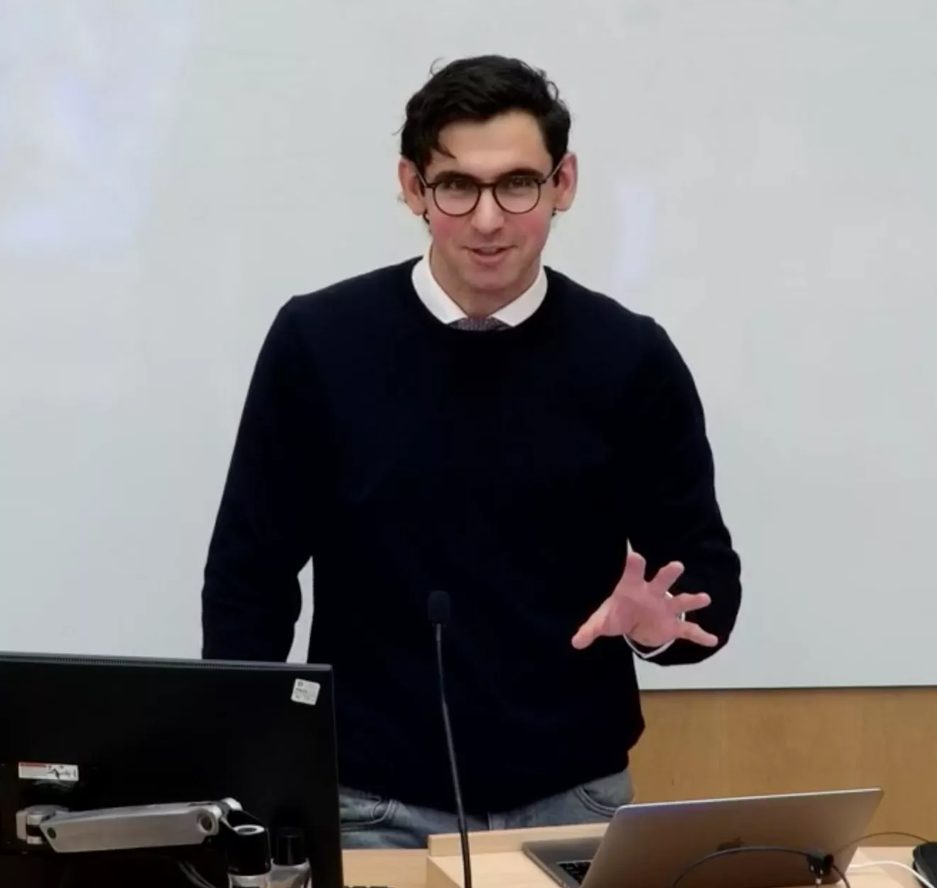
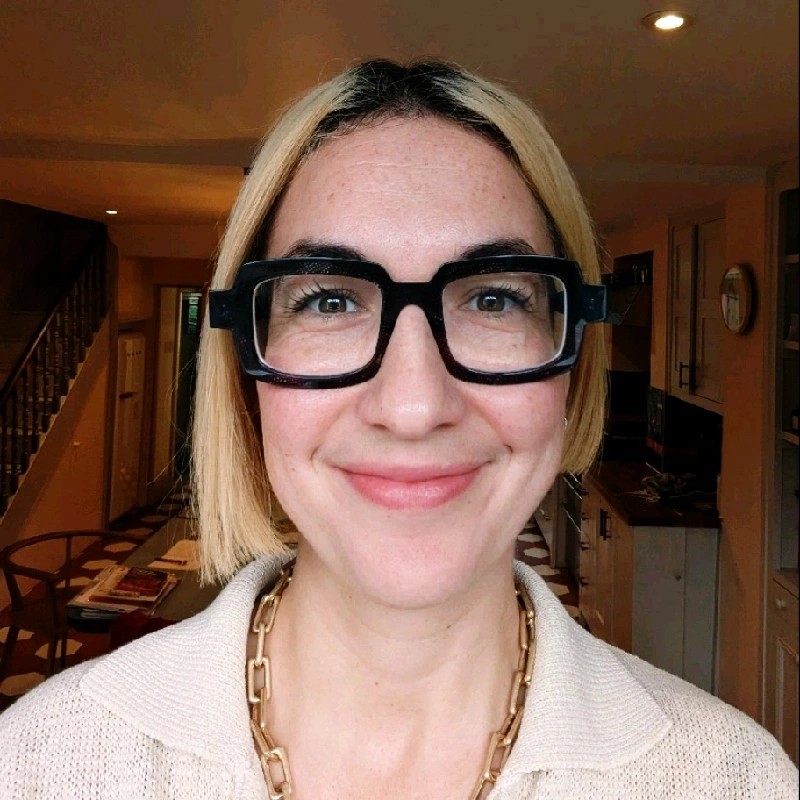
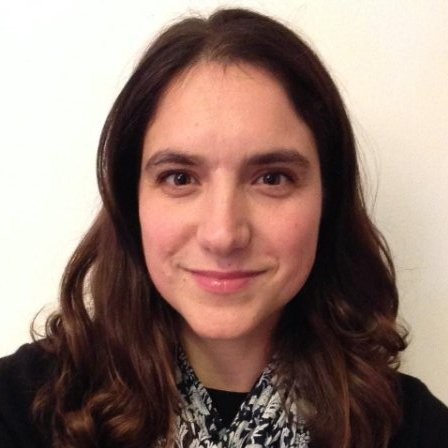
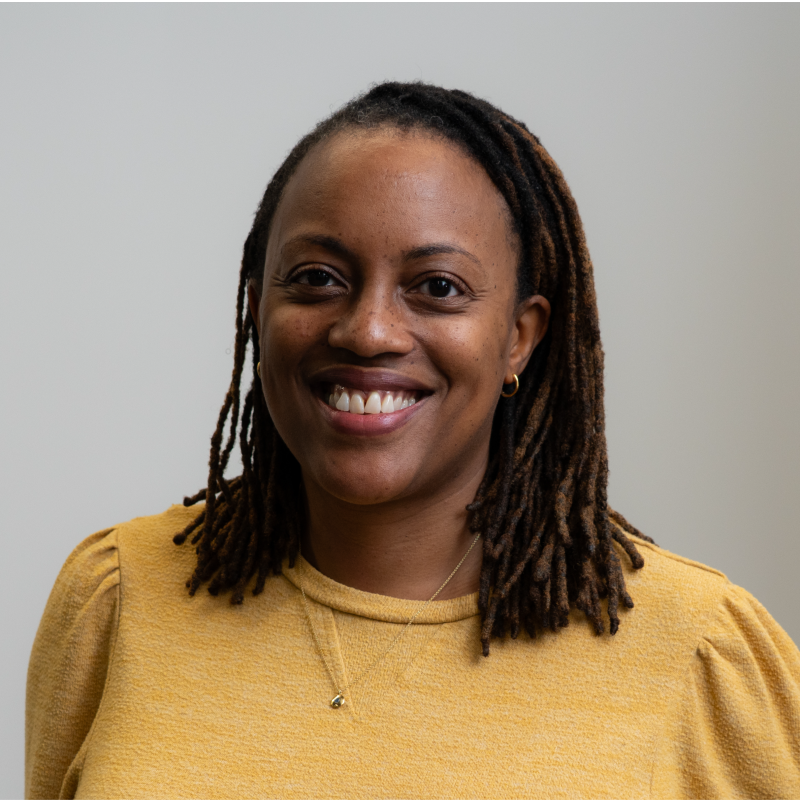
If I had to sum up the Knowledge Quarter in one sentence, I would describe this part of the world as the best place in the world to do world-class science. Within the Knowledge Quarter, we’ve got something like 1,500 life sciences organisations, which is phenomenal. These include other research organisations like universities, hospitals, clinicians, biotech companies, pharmaceutical companies, and big tech companies, all of whom we collaborate with to advance our science into those interventions that impact life.
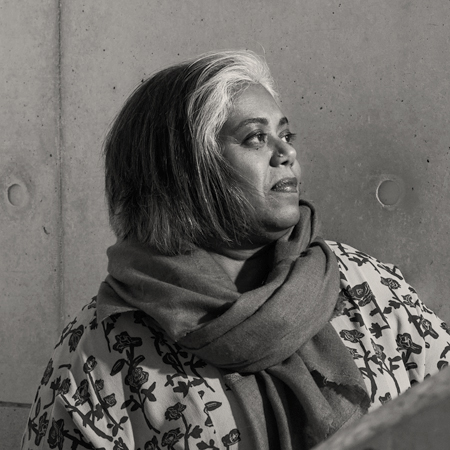
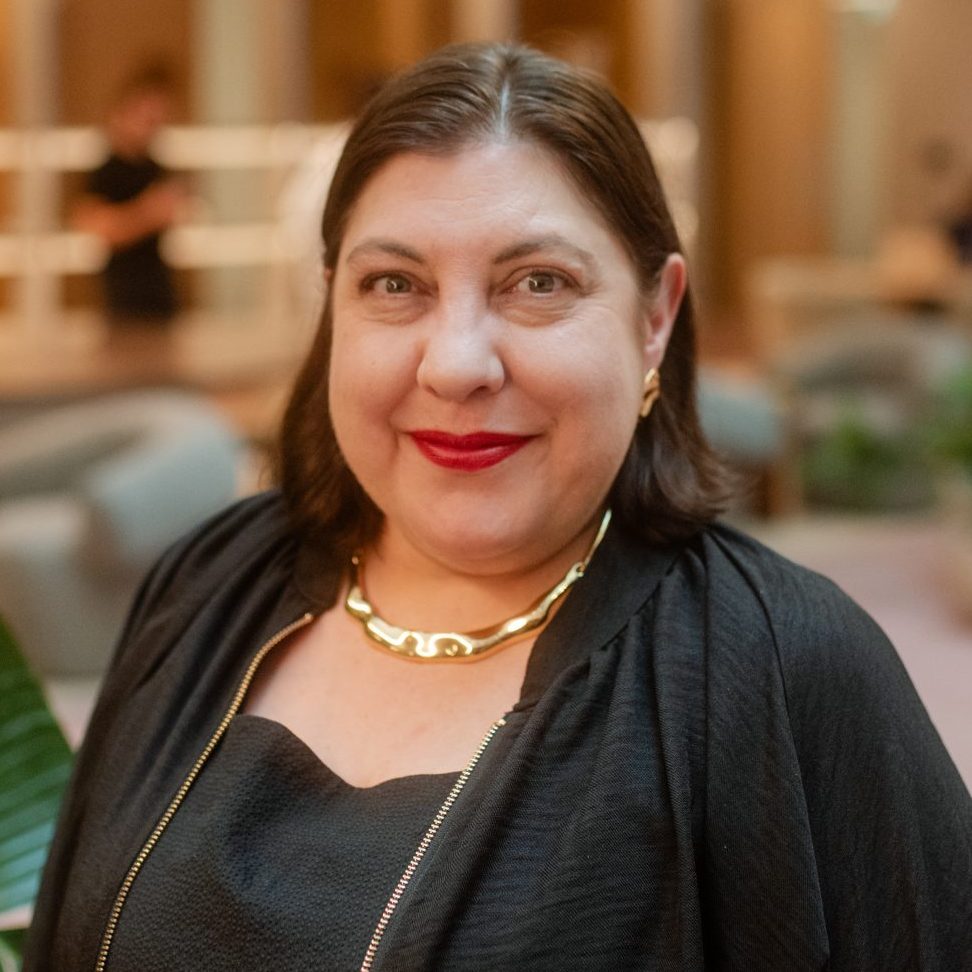
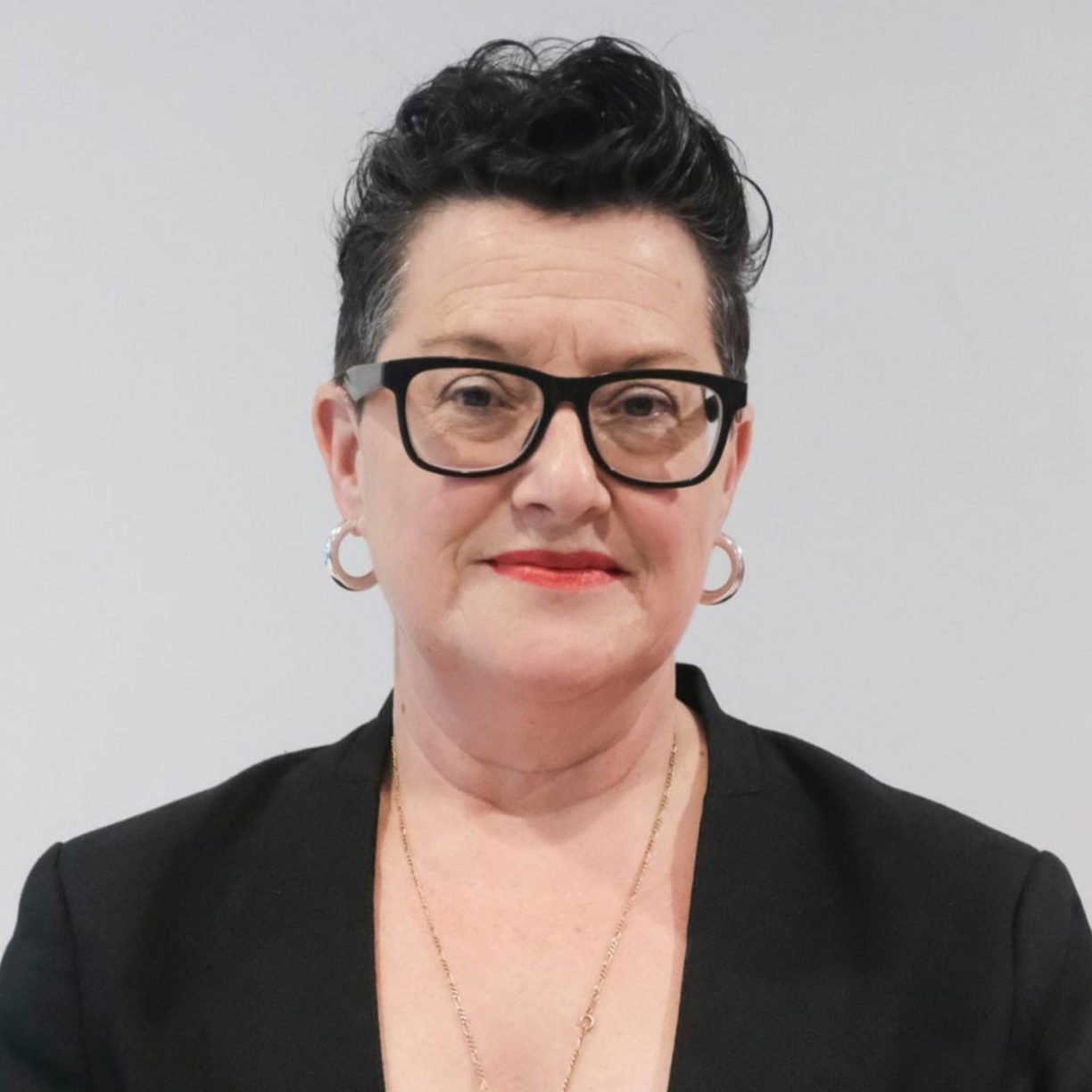
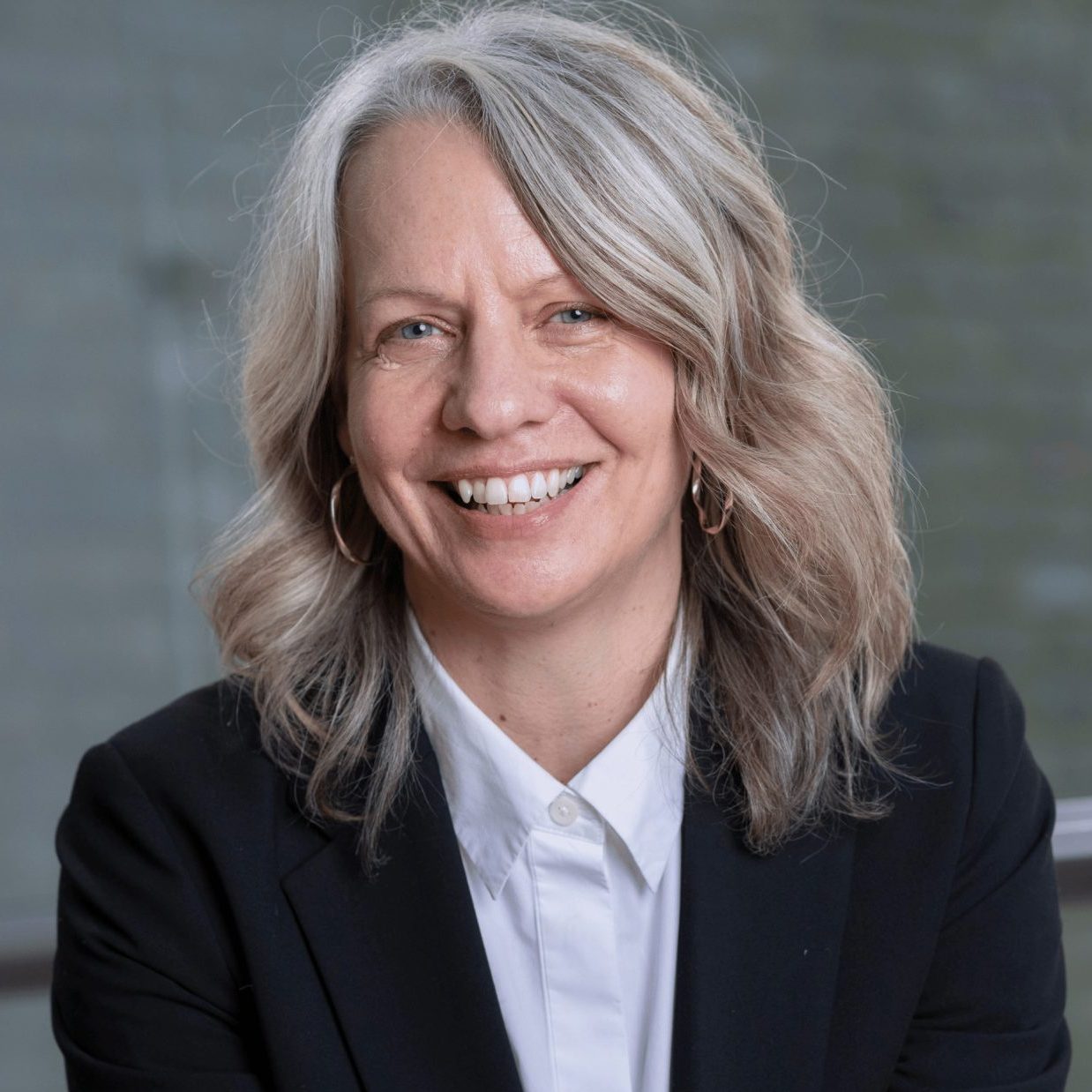
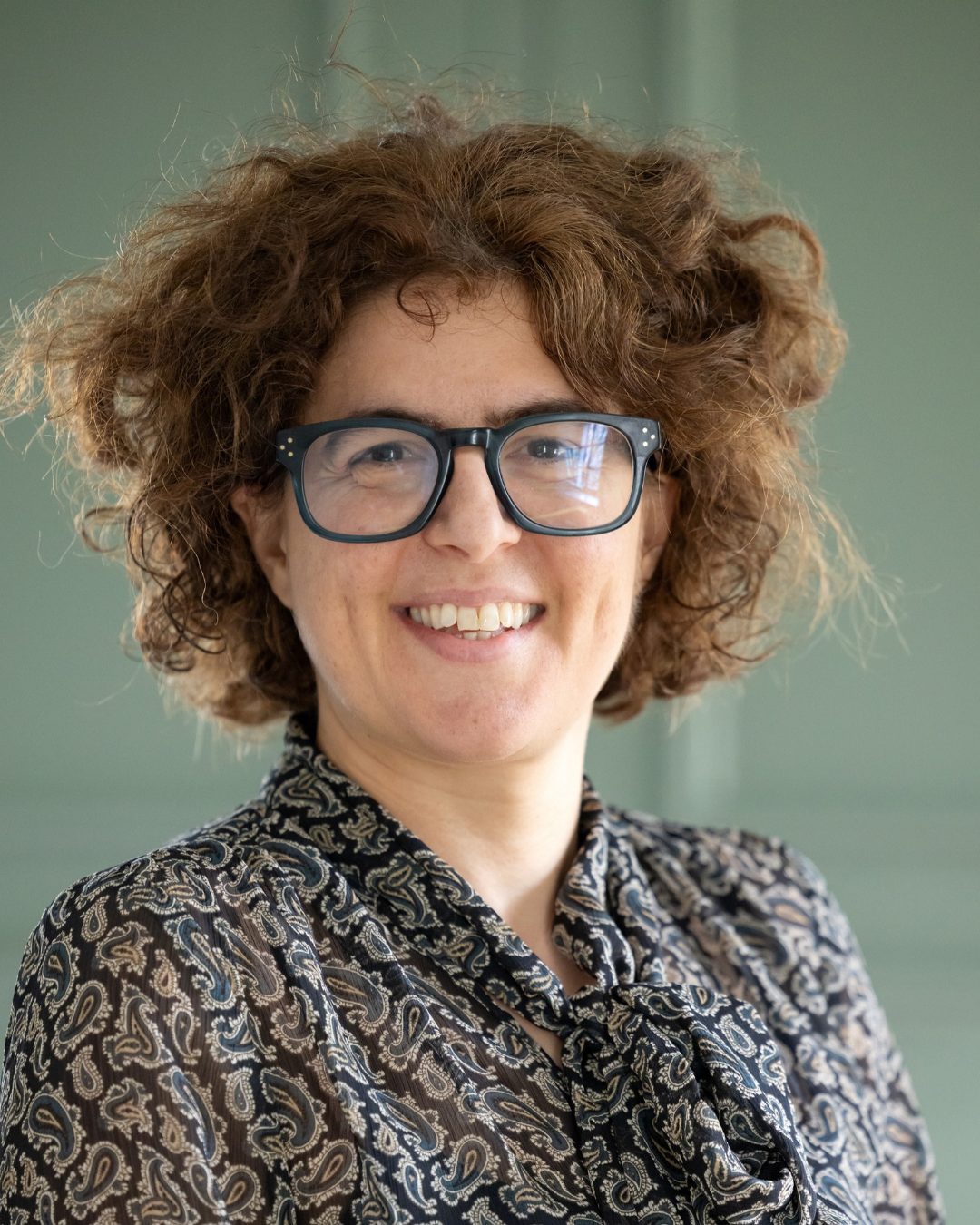
At Central Saint Martins, creative practice is always connected. Community, within and beyond our walls, is our foundation. Over the last decade the Knowledge Quarter has been integral to the Central Saint Martins community and the impact we make locally and globally. The annual conference gives us the opportunity to think about transdisciplinary innovation in practice and how creativity – in partnership – can generate real, productive change.
Rathna Ramanathan
Provost, Central Saint Martins and UAL Executive Dean, Global Affairs
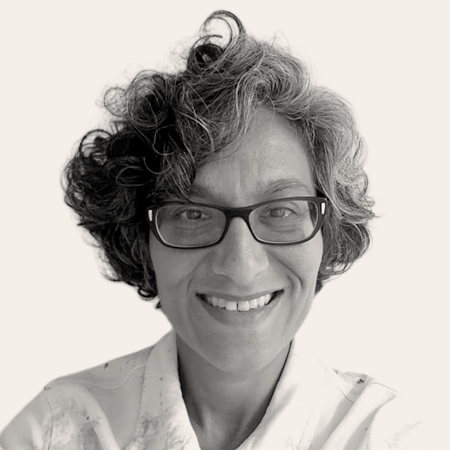
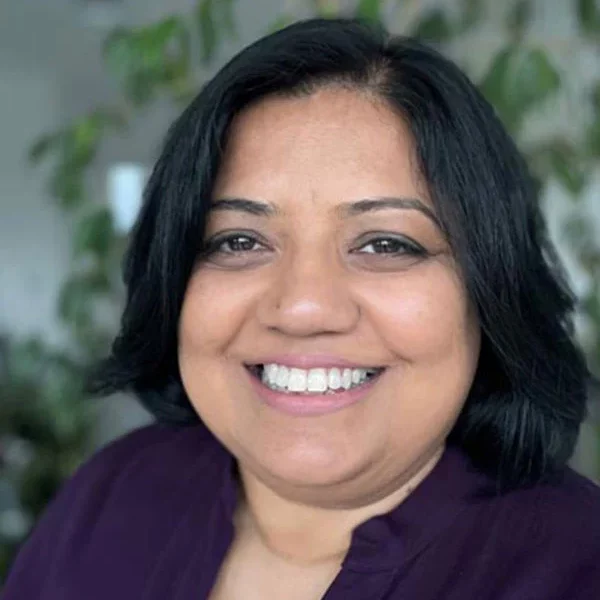
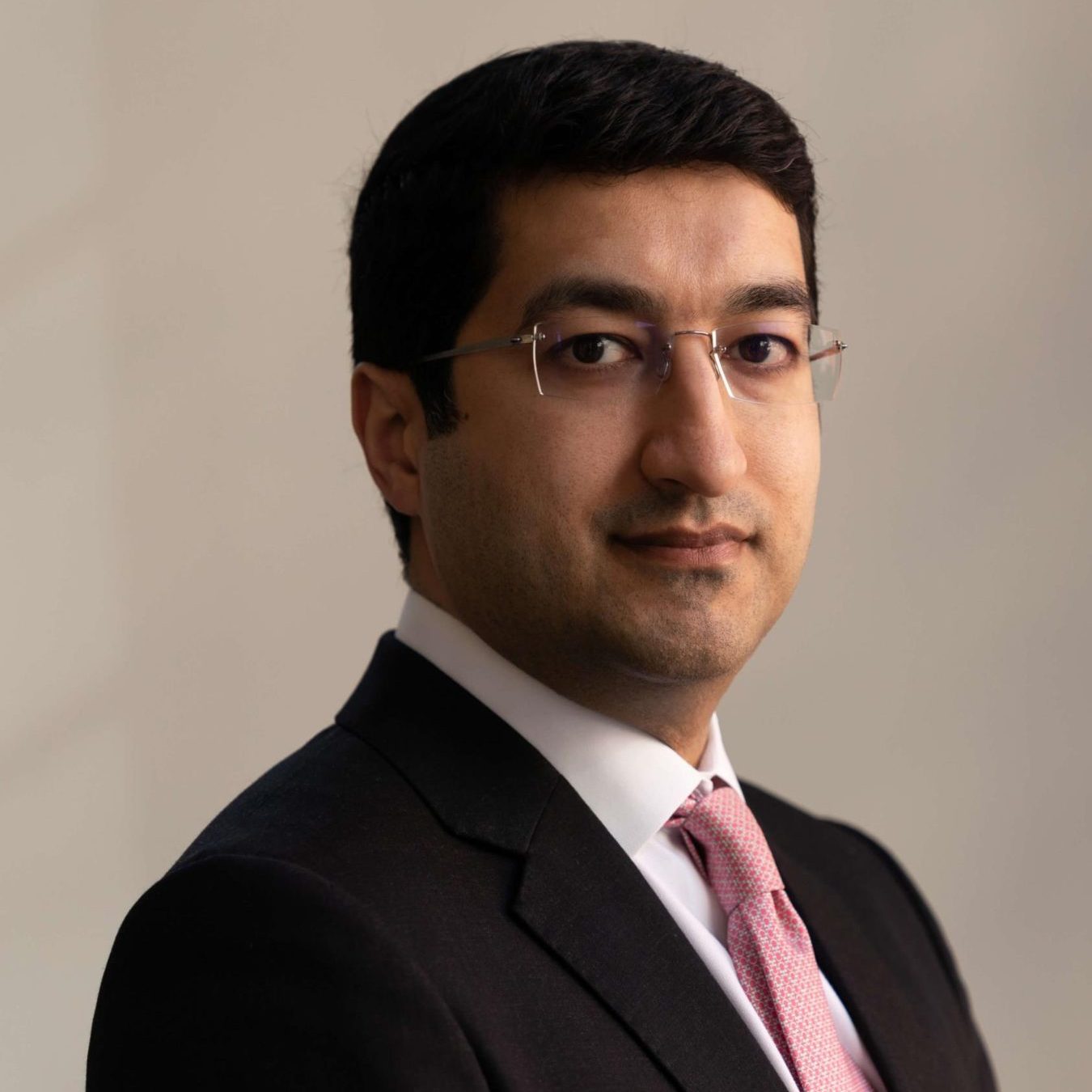
The opportunity to be part of the Knowledge Quarter is very much like being part of a living lab. The whole campus is rich with possibilities for working with organisations, but also communities that bring different teams from different sectors, different disciplines, different lived experiences.
Monica Hundal
Director of CSM Innovation, Central Saint Martins College of Art and Design
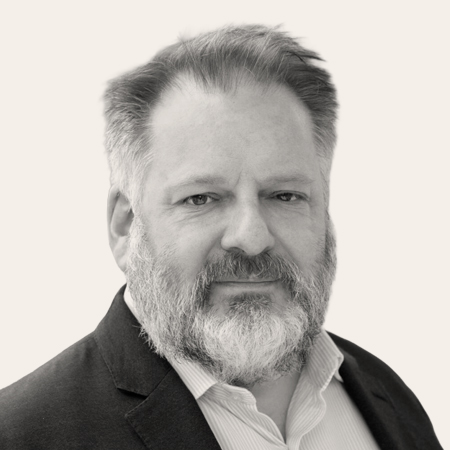
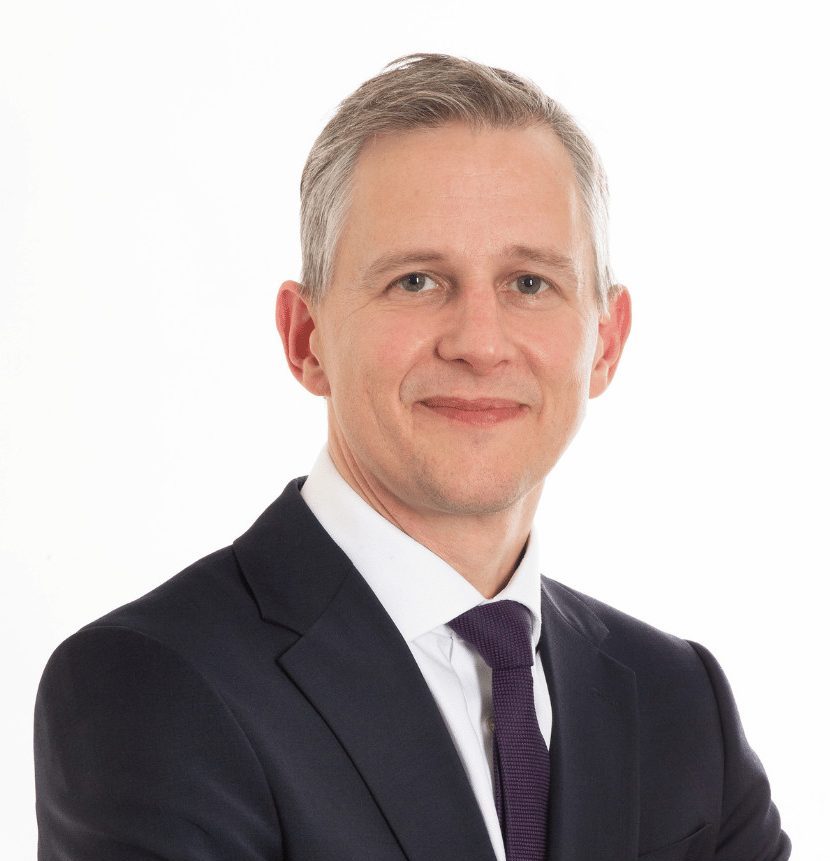
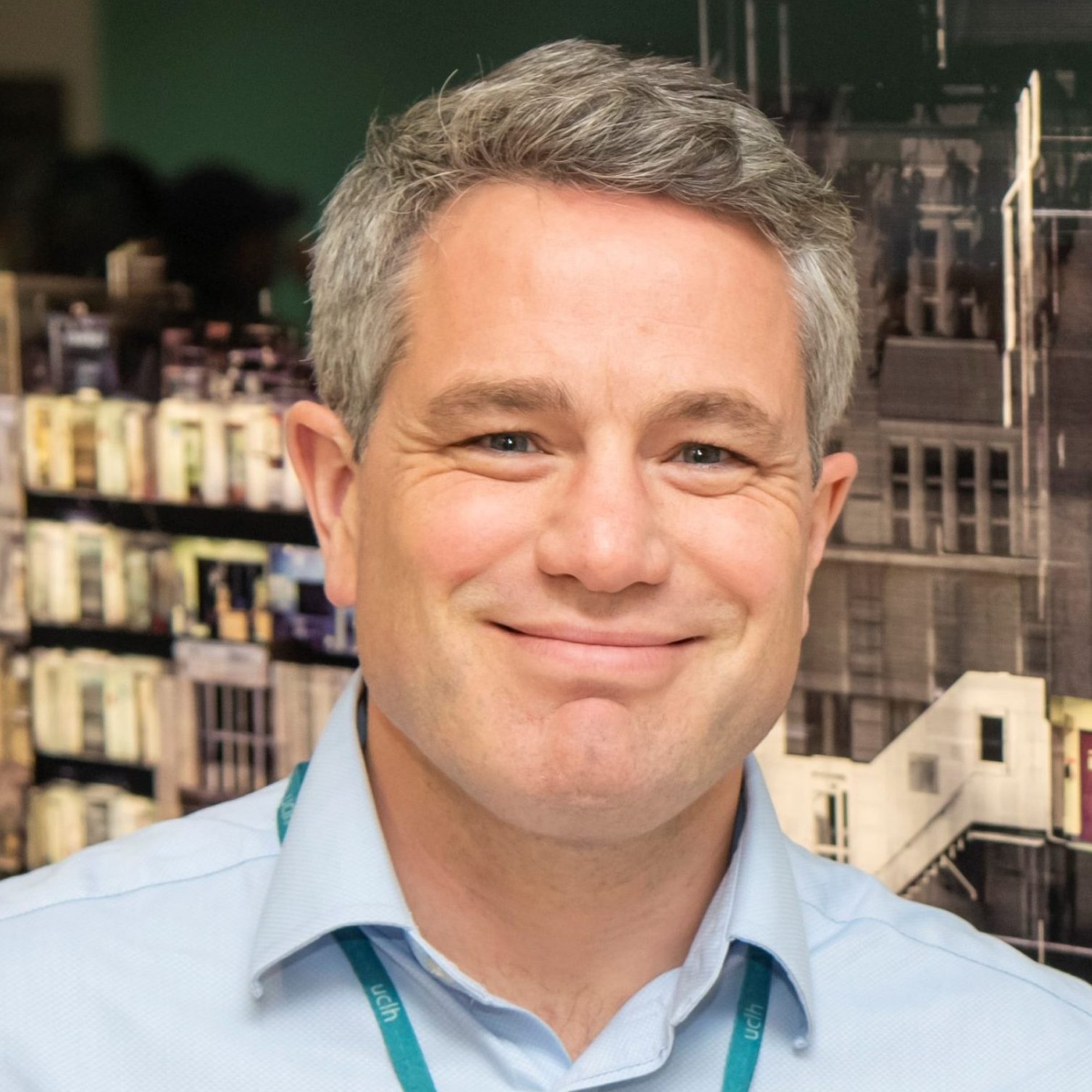
I think London has a really important role to play in the global ecosystem of knowledge, and here at the Knowledge Quarter, we like to see this as one of the hearts of that ecosystem, as well as what we call the galaxy of clusters in the London ecosystem. It has a great focus on tech, on higher education, on health and life sciences, on international learning, and it’s really a crucial part of the wider economy of London and our focus on the frontier innovation parts of the economy… The future is very, very bright here, and it’s something that’s absolutely crucial for London.
Howard Dawber
Deputy Mayor of London for Business and Growth; Chair of London & Partners
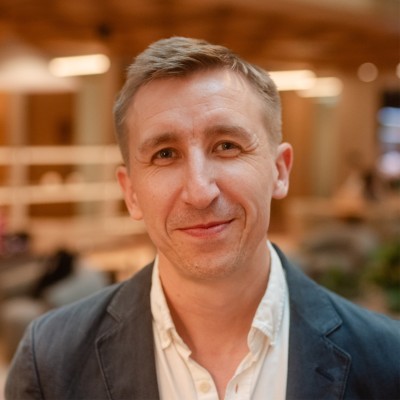
Come and talk to all the companies in the Knowledge Quarter. There’s a lot to be done, and we need you… The Knowledge Quarter is a knowledge-dense community – at the center of it is what we require. We are at the intersection of biological insights, computational excellence, and an innovative community of academia, startups, and companies. That is the reason why we chose to base Relation at the heart of the Knowledge Quarter.
Jodie Eastwood is CEO of London’s Knowledge Quarter, a consortium of knowledge creators within a one mile radius of Kings Cross. KQ Partners include over 100 academic, cultural, research, scientific and media organisations large and small: from the British Library and University College London to Universal Music, British Museum, Francis Crick Institute and Google. The aim of the KQ is to encourage all kinds of knowledge seekers to make the most of the partners’ combined resources. To break down barriers and stimulate dialogue, to create new friendships, new connections and new knowledge through a sense of shared purpose and possibility.
Jodie has been working within the Knowledge economy for the past 20 years, with roles at the British Library, Creativeworks London, Queen Mary University of London, London Metropolitan University and the London Chamber of Commerce and Industry. She strongly believes that knowledge exchange breeds innovation, fruitful networks and creative interaction. Jodie specialises in leading complex multi stakeholder partnerships, brokering relationships and creating spaces for ideas sharing and innovation.
Fireside Chat
10:15 – 10:45
30 MINS
PIGOTT THEATRE
People, Place and Prosperity: In Conversation with Camden and Islington Councils
Details coming soon.
Councillor Sabrina Francis
Cabinet Member for Jobs, Young People and Culture
Camden Council
Sabrina Francis is Deputy Chair of the Knowledge Quarter board. She is serving her fourth term as a Labour councillor for Bloomsbury ward and is a member of Camden Council’s Cabinet, where she has held the portfolio for Jobs, Young People and Culture since 2022. In this role, she leads the council’s work on supporting residents into good employment, expanding opportunities for young people and championing Camden’s cultural sector.
Sabrina was first elected in 2014 and has held several positions within the council. She previously chaired Camden’s Housing Scrutiny Committee, where she helped hold the council and its partners to account on housing policy and services, and has also chaired a licensing panel. In 2021 Sabrina was the first Black woman to be Mayor of Camden, serving as the borough’s first citizen during her term.
Alongside her role in local government, Sabrina works in digital communications as Social Media Manager for the Grantham Research Institute on Climate Change and the Environment at the London School of Economics and Political Science.
Councillor James Potts
Executive Member for Inclusive Economy & Planning Islington Council
James Potts is the Executive Member for Inclusive Economy and Planning at Islington Council. He is responsible for a range of areas from strategic planning, jobs and apprentices to culture, business support and libraries. He has represented Junction Ward since November 2024 where he won a by-election and was subsequently re-elected in May 2026. James also sits on the Knowledge Quarter board.
Jodie Eastwood
CEO, Knowledge Quarter
Jodie Eastwood is CEO of London’s Knowledge Quarter, a consortium of knowledge creators within a one mile radius of Kings Cross. KQ Partners include over 100 academic, cultural, research, scientific and media organisations large and small: from the British Library and University College London to Universal Music, British Museum, Francis Crick Institute and Google. The aim of the KQ is to encourage all kinds of knowledge seekers to make the most of the partners’ combined resources. To break down barriers and stimulate dialogue, to create new friendships, new connections and new knowledge through a sense of shared purpose and possibility.
Jodie has been working within the Knowledge economy for the past 20 years, with roles at the British Library, Creativeworks London, Queen Mary University of London, London Metropolitan University and the London Chamber of Commerce and Industry. She strongly believes that knowledge exchange breeds innovation, fruitful networks and creative interaction. Jodie specialises in leading complex multi stakeholder partnerships, brokering relationships and creating spaces for ideas sharing and innovation.
10:45 – 10:55
Explainer & Breakout Room Navigation
Panel Discussion
11:10 – 11:50
40 MINS
PIGOTT THEATRE
A Sense of Belonging: How Placemaking Builds a Community
King’s Cross is one of the largest and most successful redevelopments in London. Over the past 20 years, an underused industrial site has been transformed into a thriving destination for shopping, study, artistic expression, play and commercial activity. Thoughtful placemaking has nurtured community, culture and a sense of belonging. This panel will explore how an ambitious development can become an empowered and connected neighbourhood.
Delivered in partnership with:
Zoe Stern
Head of Programmes & Public Engagement,
AI Exchange Google DeepMind
Biography coming soon.
Andy Marsh
Course Leader for MA Arts and Cultural Enterprise, Central Saint Martins, University of the Arts London
Andy Marsh is Course Leader for MA Arts and Cultural Enterprise, Curator in Practice for BA (Hons) Culture, Criticism and Curation, and a PhD supervisor. He is an independent curator, critic, lecturer, and exhibition and project manager, with long experience across commercial and non-commercial parts of the UK art world.
Andy began his career at the Showroom Gallery in East London in the 1990s. He went on to become technical director at Stephen Friedman Gallery, working closely with artists including Yinka Shonibare, Jim Hodges and Thomas Hirschhorn to realise exhibitions in galleries and museums worldwide. He has curated independent exhibitions in London, Birmingham, Düsseldorf and New Delhi, among other cities, with support from Arts Council England and the Elephant Trust.
Muhammod Shofi
Associate Director, Camden Giving
Shofi has lived in Camden for most of his life and has worked as a Youth Worker in a number of Camden organisations including KCBNA, one of our grantees. Shofi is an advocate for young people and communities having a voice in tackling inequalities.
Stuart Wood
Executive Partner and Group Leader, Heatherwick Studio
Stuart Wood joined Heatherwick Studio in 2002. With a background in industrial design, he has led the broadest range of projects and some of the most iconic for the studio.
With a clear focus on innovation and technology’s impact on future city design, Stuart is currently leading a diverse portfolio, including the headquarters for Google in London; the design of an at-home healthcare diagnostic device; and Singapore’s new major airport terminal at Changi (in collaboration with KPF).
He has led projects of all scales and typologies, from experimental furniture to strategic city planning. Stuart’s portfolio of past projects includes Lantern House, a two-tower residential development that spans both sides of New York’s High Line; ‘Vessel’, the public centrepiece for Hudson Yards in Manhattan’s West Side; the design phases of Google’s two new headquarters in California; an 800-acre people-centred smart city in Toronto with Sidewalk Labs; the award-winning UK Pavilion for the 2010 Shanghai World Expo; and Transport for London’s 1000 New Routemaster bus fleet.
In 2015 the studio created the role of Group Leader to support the growth in scale and number of its projects. Working with Thomas Heatherwick, Group Leaders, including Stuart, are responsible for leading all aspects of a portfolio of projects from concept development through to delivery. They are also part of the studio’s senior management group, guiding business strategy, planning and process. Stuart is also one of two Executive Partners who lead the management of the business, alongside the design of projects.
Moderator: Leo Shapland
CEO, King’s Cross Group
Leo is CEO of The King’s Cross Group, a position he has held since April 2025. Leo joined The King’s Cross Group from Workspace Group where he was Executive Director and Head of Portfolio Management, responsible for a multibillion-pound property portfolio across London and the South East.
Prior to this, he was Head of UK Real Estate Asset Management at Aviva Investors, responsible for financial performance and strategy of the UK portfolio and real estate business. Leo also spent almost a decade at Tishman Speyer working in a number of roles in asset management, development, joint ventures and investment in the firm’s San Francisco and London offices. He set up its Seattle office in 2016 where he spent three years as Head of Office, before moving back to the UK.
11:50 – 12:05
In Conversation with Sagal Abdi-Wali MP
Sagal Abdi-Wali MP
MP for Holborn and St Pancras
Sagal Abdi-Wali MP was elected to be MP for Holborn & St Pancras in October 2026. Sagal grew up in Camden and has served the community for over a decade as a volunteer and trustee for local charities, a school governor at two of our schools, and as a Local Government Officer at Camden Council. Having benefited from the opportunities and safe spaces created by local youth services and community groups as a child, Sagal is dedicated to working with groups tackling inequality and improving the lives of people in our community.
Moderator: Abdul Hai OBE
Director of Community Relations and Public Affairs, LabTech
Abdul Hai OBE has dedicated much of his adult life to advancing social justice, championing racial equality, celebrating diversity and promoting economic opportunity for all. He brings extensive experience across the voluntary and community sector, local government and the corporate world.
Abdul is currently Director of Community Relations and Public Affairs at LabTech London Limited, owner of the iconic Camden Market—a vibrant community hub and home to many small businesses and entrepreneurs.
From 2006 to 2022, Abdul served as a Councillor and Cabinet Member at Camden Council, working to make local government more responsive, inclusive and representative of the borough’s diverse communities.
He remains actively involved in civic and community life, serving as Vice-Chair of SME4Labour, a Board Member of Central District Alliance and a Trustee of Capital Kids Cricket.
Speaker TBC
TBC
Bio coming soon.
Speaker TBC
TBC
Bio coming soon.
Speaker TBC
TBC
Bio coming soon.
Fireside Chat
12:05 – 12:30
25 MINS
PIGOTT THEATRE
Investing in London Health Innovation
Every investor says London’s science is world-class. So why do so many of its best ideas scale somewhere else? Prof Geraint Rees (UCL) talks with Sutha Satkunarajah of Flagship Pioneering, the US-founded venture firm behind Moderna, and Hannah Madan, co-founder of Prima Mente, the King’s Cross startup using AI to spot early signs of Alzheimer’s, backed by Nvidia and the UK’s Sovereign AI Fund. Together they ask what London must do to keep its best life science companies growing here.
Hannah Madan
Co-Founder, Prima Mente
Hannah is Co-Founder and COO at Prima Mente, an AI biology company focused on the brain; to understand it at a molecular level, protect it from neurological disease, and enhance it in health.
She leads across people, product, partnerships and operations, with a track record of building and scaling early-stage biotech companies, having been employee number 1, 3, 12 and 70. Her work has consistently centred on developing products that translate biological insight into real-world applications, from precision medicine to clinical trials.
Hannah holds a PhD from Queen Mary University of London, where she studied the link between diabetes and bowel cancer, and a degree in pharmacology from University of Bath. She also represented England in netball.
Sutha Satkunarajah
VP, Strategy & Operations, Flagship Pioneering
Sutha Satkunarajah is Vice President of Strategy and Operations for Flagship Pioneering in the UK. In this capacity, Sutha spearheads the long-term strategic planning and operational execution for Flagship’s expansion into the UK. He is responsible for fostering connections between the UK’s robust value pools and Flagship’s ecosystem of business origination units, initiatives, and more than 40 companies that are primarily based in Boston. He leads the ‘UK Data as an Asset’ initiative, managing partnerships with key data players like UK Biobank, and has launched Flagship’s first R&D ecosystem partnership with the Cambridge UK life sciences ecosystem. Additionally, he supports Flagship’s policy, capital formation, and talent development efforts in the UK.
Moderator: Prof. Geraint Rees
Vice Provost (Research, Innovation and Global Engagement), UCL
Geraint is UCL’s Vice-Provost (Research, Innovation & Global Engagement), responsible for providing vision and academic leadership for UCL’s portfolio of £3.61bn in research & innovation grants, £3.06bn of external investment in start-ups and spinouts over the last five years, and more international collaborative research publications with the world’s top five knowledge producing economies than any other UK university. He is a non-executive director of UCL Business, one of the world’s leading technology transfer companies, of the Francis Crick Institute and of the Alan Turing Institute, the UK’s national AI institute.
Previously he served as Dean of Life Sciences at UCL and as a Senior Scientific Advisor at Google DeepMind. With over 380 publications and 40,000 citations, his research career has focused on understanding the neural basis of consciousness using functional neuroimaging. His work has pioneered the application of multivariate machine learning techniques to neuroimaging data; he is a co-founder of hologen.ai. Geraint was awarded the Royal Society Francis Crick medal in 2007 and elected Fellow of the UK Academy of Medical Sciences in 2010.
12:30 – 13:30
Lunch
Keynote Address
14:15 – 14:30
15 MINS
PIGOTT THEATRE
Dr Paul Bate Keynote
TBC
Dr Paul Bate
Incoming CEO, The British Library
As of 4 November 2026, Dr Paul Bate will take up his new role as Chief Executive of the British Library.
From 2021-2026, Paul was CEO of the UK Space Agency. During his tenure, national civil space funding increased to unprecedented levels, catalysing private investment and economic growth, and expanding discovery research and infrastructure across the UK. He led two successful negotiations with the European Space Agency, securing record investment and UK mission leadership, and bolstered the UK’s global reputation through bilateral programmes and chairing the international Committee on Earth Observation Satellites.
Paul has also held a variety of roles in healthcare. He served in Downing Street as the Prime Minister’s senior policy adviser for health and adult care and was the Executive Director of Strategy and Intelligence at the Care Quality Commission. His private sector work includes overseeing the NHS business and global sales at a $4bn digital-first healthcare provider, co-owning a public services consultancy, and leading projects at McKinsey & Co.
He began his career as a particle physicist, holds an advisory role as Professor in Practice at the University of Surrey Space Institute, and is a trustee at the National Space Centre.
Panel Discussion
14:30 – 15:00
30 MINS
PIGOTT THEATRE
Where Do The Best Ideas Come From?
Within a mile of King’s Cross sit more than 20 universities, 350 research centres and 11,500 researchers. Yet concentration alone does not create innovation. The most transformative ideas emerge when education, industry and civic institutions work together to connect discovery with real-world application. This session explores King’s Cross as a living example of the triple helix: the interaction between universities, industry and the wider economy. Academic and research leaders from across the district will examine how knowledge is created, shared and translated into social, cultural and economic value. Panellists will discuss the conditions that enable breakthrough thinking, from proximity and collaboration to shared infrastructure, collections, facilities and partnerships, and consider how these connections attract talent, stimulate innovation and contribute to the future prosperity of London and beyond.
Professor Rathna Ramanathan
Provost, Central Saint Martins, and UAL Executive Dean, Global Affairs
Professor Rathna Ramanathan is a designer and educator known for her expertise in research-driven, intercultural, multi-platform graphic communication design projects focused in the Global South. She is Provost at Central Saint Martins, London, Executive Dean: Global Affairs at University of the Arts London and a Professor in Design and Intercultural Communication.
Dr Paul Bate
Incoming CEO, The British Library
As of 4 November 2026, Dr Paul Bate will take up his new role as Chief Executive of the British Library.
From 2021-2026, Paul was CEO of the UK Space Agency. During his tenure, national civil space funding increased to unprecedented levels, catalysing private investment and economic growth, and expanding discovery research and infrastructure across the UK. He led two successful negotiations with the European Space Agency, securing record investment and UK mission leadership, and bolstered the UK’s global reputation through bilateral programmes and chairing the international Committee on Earth Observation Satellites.
Paul has also held a variety of roles in healthcare. He served in Downing Street as the Prime Minister’s senior policy adviser for health and adult care and was the Executive Director of Strategy and Intelligence at the Care Quality Commission. His private sector work includes overseeing the NHS business and global sales at a $4bn digital-first healthcare provider, co-owning a public services consultancy, and leading projects at McKinsey & Co.
He began his career as a particle physicist, holds an advisory role as Professor in Practice at the University of Surrey Space Institute, and is a trustee at the National Space Centre.
Professor Adam Habib
Vice Chancellor, SOAS University of London
Adam Habib was appointed Vice-Chancellor of SOAS University of London in 2020, arriving from South Africa where he was Principal and Vice-Chancellor of University of the Witwatersrand, former Deputy Vice-Chancellor of Research at the University of Johannesburg and former Professor of Development at the University of KwaZulu-Natal. A professor of Political Science, he has over 30 years of academic, research and administration expertise in institutions distinctively defined by engagements in the contest of ideas, their translation into actionable initiatives and the building of institutions.
Moderator: Flora Graham
Editor, Nature Briefing
Flora Graham is a science journalist and broadcaster based in London. She writes Nature Briefing, the world’s leading science newsletter, for the journal Nature. Flora was previously Digital Editor of New Scientist, and has written and presented for the BBC, CBC, and CNET, among others. Previously, Flora worked in software, hardware and videogame development. She has a degree in physics from UBC and an MSc from Imperial College London.
Fireside Chat
15:00 –15:25
25 MINS
PIGOTT THEATRE
Behind the Curtain: A Q&A with Two World-Leading TechBios
Not long ago, the idea of using AI to fix human health sounded quite like your typical sci-fi flick. Today, it’s the modern standard. Drugs designed with the help of AI are being tested in computer models long before they reach patients, and reading our DNA is helping to spot health risks earlier, while there’s still time to act. Two companies right here in King’s Cross have been at the heart of that change.
Join leaders from Relation and Genomics to talk about what’s working, what’s isn’t, and what they’re hopeful about for the patients who stand to benefit.
Delivered in partnership with:
David Thornton
President, Genomics
David transitioned to Genomics from IQVIA, a Fortune 500 corporation specialising in Human Data Science. During his tenure at IQVIA as Senior Vice President and a member of the Global Executive Leadership Group, he led the Commercial Engagement Services Division, driving advancements in patient and commercial engagement through the application of artificial intelligence, machine learning, and advanced data analytics. His prior leadership roles at IQVIA include overseeing Biotech Commercial teams across Europe and directing business development initiatives for Real World Evidence throughout the U.S., EMEA, and Asia Pacific regions.
Earlier in his career, David held diverse leadership and advisory positions within various healthcare-focused enterprises.
Genomics has been listed on The Sunday Times 100 Tech, ranking Britain’s fastest-growing private technology companies, for two consecutive years, in 2025 and 2026; as well as named BBC Business of the Year 2026 on its ‘The Bottom Line’ programme, succeeding Rolls-Royce.
Rosie Rodriguez
President, Growth, Relation
Rosie Rodriguez is President, Growth at Relation and a senior leader in the UK TechBio sector. She has over 20 years of experience across Roche, GSK and biotech and has shaped R&D strategy, partnerships and organisational growth at scale. Rosie brings deep experience building interdisciplinary organisations and translating scientific excellence into impact by aligning talent, capital and technology.
Moderator: Saskia Koopman
Tech Reporter, City AM
Bio coming soon.
Panel Discussion
15:25 – 16:00
35 MINS
PIGOTT THEATRE
What’s Next for Health Innovation in the KQ?
A state of the nation on life sciences in the Knowledge Quarter. With 176 organisations and more than 60,000 people working across research, healthcare and biotechnology, the Knowledge Quarter is one of the most concentrated life sciences clusters in the world. AstraZeneca, Novo Nordisk and GSK have all moved into the district, and between 2020 and 2024 high-growth companies here raised £6.42 billion in equity funding, much of it in biotech. Leaders from research, industry and healthcare give their read on where health innovation in the district stands now and what is coming next.
David Thornton
President, Genomics
David transitioned to Genomics from IQVIA, a Fortune 500 corporation specialising in Human Data Science. During his tenure at IQVIA as Senior Vice President and a member of the Global Executive Leadership Group, he led the Commercial Engagement Services Division, driving advancements in patient and commercial engagement through the application of artificial intelligence, machine learning, and advanced data analytics. His prior leadership roles at IQVIA include overseeing Biotech Commercial teams across Europe and directing business development initiatives for Real World Evidence throughout the U.S., EMEA, and Asia Pacific regions.
Earlier in his career, David held diverse leadership and advisory positions within various healthcare-focused enterprises.
Genomics has been listed on The Sunday Times 100 Tech, ranking Britain’s fastest-growing private technology companies, for two consecutive years, in 2025 and 2026; as well as named BBC Business of the Year 2026 on its ‘The Bottom Line’ programme, succeeding Rolls-Royce.
Amanda Keightley-Pugh
Chief Commercial Officer, LBIC
Amanda is Chief Commercial Officer at LBIC, where she leads strategic growth, business development, marketing and client engagement for one of London’s leading life sciences innovation hubs. Since joining in 2023, she has played a key role in strengthening LBIC’s market position, expanding stakeholder partnerships, driving occupancy and supporting the development of the new Apex facility, helping to create the infrastructure and community needed for high-growth science companies to thrive.
With more than 14 years of experience across the life sciences sector, Amanda brings a unique perspective that spans science, innovation, commercial strategy and the built environment. Her career has included roles supporting the launch of a life sciences campus, a clinical-stage biotechnology company, a science-focused engineering consultancy and one of the world’s largest event agencies. This experience has given her a deep understanding of the partnerships, investment and specialist real estate required to enable the UK’s science and technology sectors to grow.
Amanda also serves as a Board Member of KX Knowledge Quarter, one of London’s most influential clusters for life sciences, research, technology and innovation. In this role she works closely with academia, industry, government and investment communities, providing valuable insight into the trends, challenges and opportunities shaping the UK’s innovation economy.
Drawing on her expertise in commercial operations, stakeholder engagement and ecosystem development, Amanda works with occupiers, investors, developers and innovation leaders to help create environments where science-led businesses can scale successfully.
Dr Sam Barrell CBE
CEO, LifeArc
Sam brings over 25 years of experience in the life science and healthcare sectors, and a wealth of knowledge of activities in commercial, digital and health tech spaces. She studied medicine, training as an anaesthetist and serving in General Practice for many years, and has held a number of senior leadership positions in the NHS, most recently as CEO of Taunton and Somerset NHS Foundation Trust.
Sam joined The Crick in 2017 as Chief Operating Officer before becoming Deputy CEO with responsibility for strategic management and operational leadership. She has served as a non-executive director of Assura plc and York Health Economics Consortium, and was a member of the advisory council of the King’s Fund. Sam received a CBE in 2014 for her services to healthcare.
Dr David Hallett
Chief Scientific Officer, Recursion
David Hallett, Ph.D., joined Recursion in November 2024 after approximately 5 years as the Chief Scientific Officer and Interim CEO of Exscientia. David is an experienced drug hunter with over 25 years’ track record leading successful teams and driving major strategic collaborations. Prior to joining Exscientia, from 2005 to 2019 he held various positions within Evotec including Executive Vice President of Chemistry and EVP of Alliance Management. Dr. Hallett trained as a medicinal chemist and served as a Research Fellow at Merck & Co., Inc. He holds a B.A. from the University of Cambridge in Natural Sciences, a Ph.D. from the University of Manchester in Synthetic Organic Chemistry and was a post-doctoral fellow in Synthetic Organic Chemistry at the University of Texas Austin.
Moderator: Saskia Koopman
Tech Reporter, City AM
Bio coming soon.
Stage Showcase
16:00 – 16:20
20 MINS
PIGOTT THEATRE
Music That Moves: A Live Interactive Performance
Following the live performance, this panel explores creative health: the growing recognition that arts and cultural activity can improve health and wellbeing. Taking music-based stroke and neurorehabilitation as its focus, speakers from music, clinical practice and research discuss how creative approaches are already supporting patient recovery on hospital wards, and what evidence and cross-sector partnership are needed to embed creative health in mainstream care across the NHS and beyond.
Delivered in partnership with:
TBC
Royal Philharmonic Orchestra
Bio coming soon.
TBC
Royal Philharmonic Orchestra
Bio coming soon.
TBC
Royal Philharmonic Orchestra
Bio coming soon.
Panel Discussion
16:20 – 16:50
30 MINS
PIGOTT THEATRE
Creative Health through Music and Movement
Following the live performance, this panel explores creative health: the growing recognition that arts and cultural activity can improve health and wellbeing. Taking music-based stroke and neurorehabilitation as its focus, speakers from music, clinical practice and research discuss how creative approaches are already supporting patient recovery on hospital wards, and what evidence and cross-sector partnership are needed to embed creative health in mainstream care across the NHS and beyond.
Delivered in partnership with:
Dr Tim Steiner
STROKESTRA® UK’s lead facilitator
Bio coming soon.
Nicole Walmsley
Clinical Specialist Occupational Therapist, National Hospital for Neurology and Neurosurgery
Nicole Walmsley leads occupational therapy services for stroke at the National Hospital for Neurology and Neurosurgery. Since qualifying as an Occupational Therapist in 2001, she has specialised in neurological rehabilitation, mainly within the NHS, helping people rebuild their independence after stroke, brain injury and other neurological conditions.
In her current role, Nicole assesses how a stroke affects a person’s thinking, vision, movement and mood, then designs personalised rehabilitation to help them return to everyday life. She works closely with colleagues in social care to make sure patients leave hospital safely.
Before this, Nicole was lead Occupational Therapist at Guy’s and St Thomas’ NHS Foundation Trust, covering stroke, neuro-rehabilitation and critical care, where she also helped set up vocational rehabilitation services supporting people back into work. She has also worked in independent practice and as an expert witness.
Dr Ruth Herbert
Music Psychologist and Co-Director, Creative Health and Wellbeing Group City St George’s, University of London
Dr Ruth Herbert is a music psychologist and professional pianist based at City St George’s, University of London. She has a keen interest in how and why people engage with the arts – particularly music – in everyday life, how creative engagement shapes ways of being in and experiencing the world, and how participatory arts can support health and wellbeing. Research interests embrace creative health, music and consciousness and psychological phenomenology.
She has been a Co-I on Project CREATE, a UKRI-funded research project that applies transdisciplinary understanding to arts-based mental health research, and was previously a Co-I for an AHRC project investigating autistic girls’ identities/experiences. Publications include a co-edited volume on music and consciousness (OUP, 2019), a monograph on the phenomenology of everyday music listening (Routledge 2016[2011) and a co-edited volume (with Prof. Nicola Shaughnessy & Dr Emma Williams) titled Beyond Autistic Stereotypes: Gender, Identity & Experience [OUP, forthcoming].
Journal articles and chapters have centred on a range of topics, including arts-based practices and mental health, musical daydreaming, trancing and cross-cultural musicking and identity. Ruth has contributed to UK BBC Radio 4 & 5 features on music and consciousness, music and spiritual wellbeing, and music, food and multisensory experience.
Prof Emma Redding
Dean of C School, Contemporary Performance Science Practitioner, Educator and Researcher, Central Saint Martins, University of the Arts London
Emma is a dance artist, educator and researcher working where contemporary dance meets performance science. She trained as a dancer and performed with the Hungarian company Tranz Danz in Budapest and for choreographers including Rosalind Newman, Athina Vahla and Tony Thatcher, building a particular interest in site-specific and cross-disciplinary work.
Emma co-authored the world’s first Master’s degree in Dance Science and has since played a major part in establishing dance science as a recognised academic field. She is a founding partner of the UK’s National Institute for Dance Medicine and Science and a Past President of the International Association for Dance Medicine and Science. Alongside her teaching, she has supervised more than 90 Master’s dissertations and several PhDs, on topics from dancer health and wellbeing to creativity and dance for health, and has published over 60 peer-reviewed papers.
She advises universities in Europe, Asia and the US on curriculum development, is a Senior Fellow of the Higher Education Academy, and was awarded an MBE in 2024 for services to dance.
Closing Keynote
16:50 – 17:00
10 MINS
PIGOTT THEATRE
Closing Keynote
Jodie Eastwood
CEO, Knowledge Quarter
Jodie Eastwood is CEO of London’s Knowledge Quarter, a consortium of knowledge creators within a one mile radius of Kings Cross. KQ Partners include over 100 academic, cultural, research, scientific and media organisations large and small: from the British Library and University College London to Universal Music, British Museum, Francis Crick Institute and Google. The aim of the KQ is to encourage all kinds of knowledge seekers to make the most of the partners’ combined resources. To break down barriers and stimulate dialogue, to create new friendships, new connections and new knowledge through a sense of shared purpose and possibility.
Jodie has been working within the Knowledge economy for the past 20 years, with roles at the British Library, Creativeworks London, Queen Mary University of London, London Metropolitan University and the London Chamber of Commerce and Industry. She strongly believes that knowledge exchange breeds innovation, fruitful networks and creative interaction. Jodie specialises in leading complex multi stakeholder partnerships, brokering relationships and creating spaces for ideas sharing and innovation.
Keynote Address
11:10 – 11:30
20 MINS
ELIOT SUITE
Back to Foundations: Rebuilding AI in the Public Interest
The most powerful AI systems are being built by a small number of companies at enormous cost. The result is technology that’s impressive but prone to basic errors, hard to scrutinise and controlled by very few. Professor David Barber, Director of UCL’s new national SOFAIR Lab, makes the case for going back to foundations with open, efficient AI built in the public interest.
Delivered in partnership with:
Professor David Barber
Director UKRI Science of Fundamental AI Research Lab (SOFAIR)
David Barber received a BA in Mathematics from Cambridge University and subsequently a PhD in Theoretical Physics (Statistical Mechanics) from Edinburgh University. He is Director of the UKRI Science of Fundamental AI Research Lab (SOFAIR). He has broad research interests related to the application of probabilistic modelling and reasoning. David cofounded the startups re:infer (acquired by UiPath) humanloop (acquired by Anthropic) and vectify and is Distinguished Scientist at UiPath.
Panel Discussion
11:30 – 12:00
30 MINS
ELIOT SUITE
Design That Delivers
Join UAL Arts Temps to learn how to harness design to build your brand, express your values, communicate your mission, amplify your message and create meaningful impact.
Delivered in partnership with:
Sara Coppa
Brand Designer
Sara is a multidisciplinary designer working across brand identity, storytelling and experience design. Her work spans healthcare, culture and education, with clients and collaborators including NHS, Bloomsbury Festival and University of the Arts London. She is the creative behind the visual identity of this year’s Future of Knowledge conference.
With a background in Narrative Environments from Central Saint Martins, Sara is interested in how design can make complex ideas tangible, accessible and engaging. Combining analytical thinking with a human-centred approach, she uses storytelling to shape experiences that connect people, places and ideas across physical and digital environments.
Naomi Menezes
Creative Strategist, formerly Accenture Song
Naomi Menezes is an experiential designer and creative strategist specialising in brand identity, visual communication and creative direction. A graduate of UAL’s London College of Communication, she has built her career across the UK creative industry, working with global brands across technology, B2B, retail and culture. Her freelance projects include overhauling the brand for S’ABLE Labs, the skincare start-up of Idris and Sabrina Elba. She worked at Accenture Song before moving on to spearhead Kansei Network, an independent creative agency exploring brand, culture and experience. Her work blends design, strategy and storytelling to create meaningful, culturally relevant experiences that connect brands with their audiences.
Ivy Alice
Head of Design, Class 13
Ivy Alice is a multidisciplinary graphic designer based in London, working across visual identity, editorial and illustration. Her work is rooted in visual storytelling and finding creative ways to make complex ideas clear, engaging and accessible, often combining analogue processes with digital design. As Head of Design at Class 13, a Brixton-based education charity putting equity at the heart of education, she has developed the organisation’s visual identity and wider approach to communicating its work across print and digital. She combines a strong visual language with a focus on audience, clarity and purpose.
Moderator: Sam Taylor
Managing Director, UAL Arts Temps
Sam is Managing Director of Arts Temps, UAL’s specialist recruitment service connecting students and graduates with paid work opportunities across UAL and with external organisations. With a background in recruitment, HR and operational leadership, Sam has led the significant growth and transformation of Arts Temps into a £9.5m operation, creating thousands of paid opportunities each year. They are passionate about improving access to meaningful paid work, strengthening employer partnerships and ensuring students develop the skills, experience and confidence to succeed in their careers.
Keynote Address
12:10 – 12:30
20 MINS
ELIOT SUITE
The Bayeux Effect: Measuring the Real Value of Knowledge Exchange
Most of the sector still counts visitors. Bayeux Across Britain set out to do something harder – build a national evidence base for the value of culture and knowledge exchange. Edmund Connolly, Programme Lead at the British Museum, shares how the British Museum’s insights team built the methodology, what it reveals about knowledge moving through a connected network rather than a single site, and why it strengthens the case for investment. Plus a few good Bayeux facts.
Delivered in partnership with:
Edmund Connolly
Programme Lead, The British Museum
Edmund is a strategic leader working at the intersection of culture, technology and business futures. His work explores how emerging technologies are reshaping consumer markets, creative economies and the ways audiences engage with culture.
With a focus on ethics, cultural innovation and audience intelligence, Edmund works across UK and international cultural markets, helping organisations understand changing audiences, identify new opportunities and make evidenced strategic decisions. His work brings together audience data, market modelling and cultural insight to explore where demand is shifting, how cultural participation is evolving, and how organisations can use technology responsibly to build more relevant, resilient and accessible cultural experiences.
Edmund has worked with brands such as Google Arts Culture, The British Library, YouTube, Decca and the British Museum.
12:30 – 13:30
Lunch
Panel Discussion
13:30 – 14:10
40 MINS
ELIOT SUITE
Transforming Knowledge into Impact
World-leading research advances knowledge, informs decisions, inspires innovation and helps address society’s biggest challenges. Its impact is measured and scrutinised through assessments, rankings, studies and more as organisations across the KQ and beyond ask: how can research reach the people who can understand, use and build on it?
This session will explore what helps research travel further and contribute to real-world impact. Drawing on new analysis from Springer Nature and wider evidence of research visibility, engagement and influence, panellists will examine how knowledge reaches policy, innovation, healthcare and wider society. They will also consider how this process can be strengthened, recognising that impact may be indirect, unexpected or take time to emerge.
The KQ brings together a distinct mix of academic, cultural, technology and research organisations, all of whom are well versed in conducting and communicating knowledge that moves the dial forward. As conference considers the future of knowledge, this session offers a unique opportunity to pool knowledge and learnings from peers and experts in the room about ensuring research is discovered, understood and used for the benefit of society and generations to come.
Delivered in partnership with:
Professor Alexandra Hartman
Professor of Political Science and Co-Director of UCL Policy Lab
Alexandra Hartman is Professor of Political Science and Public Policy and Academic Co-Director of the UCL Policy Lab. She is also a faculty affiliate of the Immigration Policy Lab and EGAP (Evidence in Governance and Politics).
Her research looks at how marginalised groups interact with the state, with a focus on displacement, inequality in property rights, and survivors of sexual violence. She works in conflict and post-conflict countries as well as in Europe and the UK, combining randomised controlled trials, detailed data and in-depth fieldwork, and also writes on research ethics.
Her work has been supported by organisations including the National Science Foundation, UNHCR, the Norwegian Refugee Council and J-PAL, and published in leading journals such as PNAS, the American Political Science Review and International Organization.
Priya Madina
VP, Research Ecosystem Initiatives, Springer Nature
Priya joined Springer Nature in August 2026 as Vice President for Research Ecosystem Initiatives, a new role. Her immediate priority is to take over ownership of three pan-publisher ‘trust’ initiatives: (1) Journal Trust Markers, (2) TRACE (AI provenance and measurement), and (3) Peer review recognition.
Previously, Priya was Vice President for External Affairs and Policy at Taylor & Francis for 7 years where she chaired the open research committee. She has extensive experience in developing and positioning global policies with relevant stakeholders and decision-makers and currently sits on the Publishers Association’s Academic Publishers Council and the policy committee of the Association of Learned and Professional Society Publishers (ALPSP).
Before joining the world of publishing, Priya spent ten years at GlaxoSmithKline in a variety of government affairs, policy and market access roles. In her most recent role as Director of Government Affairs, she led the company’s positioning on international intellectual property and global health issues. She also gained experience in the external affairs function for the International Federation of Pharmaceutical Manufacturers & Associations in Geneva.
Priya’s previous roles include working across a wide range of policy and government affairs functions at the World Health Organization, the European Commission and the UK Government‘s Department of Health. Her global and regional experience includes working in the Philippines, Switzerland, Luxembourg, Belgium and France.
Priya has a Masters in Classics and Modern Languages from Oxford University. She speaks English and French and has good knowledge of Hindi and German.
Professor Adam Sobey
Mission Director, Sustainability, Alan Turing Institute
Professor Adam Sobey is Mission Director for Sustainability at the Alan Turing Institute and Professor of Data-Centric Engineering in the Maritime Engineering group at the University of Southampton. The Sustainability mission focuses on the safe decarbonisation of transportation networks, manufacturing processes and critical infrastructure, to create pathways to net zero. The mission uses the tools of data-centric engineering, pioneered by researchers at the Turing in partnership with Lloyd’s Register Foundation, a global safety charity with a mission to engineer a safer world. He is also a Non-Executive Director at Theyr Ltd, a MetOcean and Voyage Optimisation Software provider and at AQ, provide tools for Digital Assurance.
Dr Marieke Navin
Head of Public Engagement and Dialogue, Institute of Physics
Marieke Navin is the Head of Public Engagement and Dialogue at the Institute of Physics. She was previously Head of Programming at the Cheltenham Science Festival, and Head of Contemporary Science at the Museum of Science and Industry in Manchester. Marieke is experienced in bringing science to life in the most creative ways possible. She has used ballet dancers to interpret the collisions of protons at the Large Hadron Collider and circus performers to demonstrate the strength and flexibility of graphene. Marieke has a first degree in Physics and Astronomy and a PhD in particle physics, where she chased elusive neutrinos in a huge tank of water below a mine in Japan.
Dr Beth Montague-Hellen
Head of Library & Information Services, The Francis Crick Institute
Bio coming soon.
Moderator: Phil Ball
Science Writer, formerly Springer Nature Editor
Philip Ball is a freelance science writer and broadcaster. He spent over twenty years at Nature, first as physical sciences editor and later as Consultant Editor. He has written many popular science books, exploring subjects from water and natural patterns to colour in art, music cognition and physics in Nazi Germany. A columnist for Chemistry World, he also writes for the Guardian, New York Times, Financial Times and New Scientist, and has presented BBC Radio 4’s Science Stories. He has lectured widely, from the V&A to NASA. He holds a chemistry degree from Oxford and a physics PhD from Bristol.
Panel Discussion
14:15 – 14:45
MINS
ELIOT SUITE
The Future Isn’t Written: Who Shapes What Comes Next?
AI will decide very little on its own. What we do with it — what we choose to value, protect and build — is a question for artists, citizens and philosophers as much as for technologists. This December the AI Exchange opens in King’s Cross: a free public space, part gallery and part workshop, made for exactly that conversation. Join creative and local voices from the Exchange’s own community for a fast, honest 25 minutes on the future we want — and who needs to be in the room to shape it.
Delivered in partnership with:
Stephanie Sherman
Course Director, MA Narrative Environments at Central Saint Martins, University of the Arts London
Stephanie Sherman is a researcher, strategist, writer and producer at Central Saint Martins, UAL, working across urbanism, technology and design. She develops large-scale projects that repurpose outmoded systems, sites and surplus as collaborative platforms. She founded Elsewhere, transforming a three-storey second-hand store into an immersive creative space, and Kulturpark, which helped turn an abandoned East Berlin amusement park into a public park. She is Associate Director of Antikythera, the Berggruen Institute’s research programme on planetary computation, and founder of Radio Espacio Estación, a nomadic radio station. She holds a design PhD from UC San Diego, researching the histories of automation.
Amy Brown
Head of Creative Strategy, Google DeepMind
Amy Brown is a senior creative and strategic leader with over 20 years of experience in brand, events and entertainment. As Head of Creative Strategy at Google she acts as the voice of the brand – creating award-winning, high-impact experiences. She works to bring the helpfulness of opportunities created by technology to everyone, and connect brand actions to local economies.
Laura Flynn-Coley
Campus Director, London AI Campus
Laura Flynn-Coley is Director of the London AI Campus, part of Camden Learning, where she provides strategic leadership in developing and delivering innovative programmes that broaden access to AI education and create opportunities for young people and educators.
A computer scientist and computing education specialist, Laura brings together expertise from education, industry and leading AI organisations to design AI education programmes, build strategic partnerships and enable young people to engage with emerging technologies, learn from industry experts and explore future career pathways.
She is a passionate advocate for widening participation in AI, committed to ensuring that young people from all backgrounds have the opportunity to shape and benefit from an AI-enabled future.
Moderator: Abdullah Talha
Student, London AI Campus
Moderator: Carolina Pilar Rietsch-Gomez
Student, London AI Campus
Fireside Chat
14:55 – 15:20
25 MINS
ELIOT SUITE
Community Centre for the Future
The Community Centre of the Future is a scalable, multi-dimensional model that addresses social, environmental, and governance challenges within a single cohesive framework. Grounded in four structural domains—Knowledge & Power, People & Place, The Natural Environment, and The Built Environment—the model integrates national health targets, urban planning frameworks, local governance mechanisms, global frameworks and international goals.
By operationalizing frameworks such as One Planet Living (OPL) and Doughnut Economics, the model drives the local delivery of the UN Sustainable Development Goals (SDGs) while fostering deep epistemic and behavioural change at the community scale.
Delivered in partnership with:
Sarah Elie MBE
Chief Executive, Somers Town Community Association
Bio coming soon.
Diba Salam
Founder of StudioDS
Diba Salam is the founding Principal and Creative Director of Studio DS, a dynamic London based architectural studio with bureaus in Dubai and Bangkok. She founded the practice in 2012 after leading national and international projects, such as Imperial College, White City, London and Aldar’s Yas Island Hotels in the United Arab Emirates.
Diba has made research a key part of her entrepreneurial business by analysing place making, smart designs and neuroscience in architecture. The studio’s core values are to create efficient, adaptive, and effective communities through design by establishing stakeholder needs. Each solution is uniquely tailored to maximise the social economic and environmental potential of each individual site, celebrating exceptional detail craftmanship through modern methods of construction.
She has a hands on integrated approach to the studio and, from the outset, has been fully involved in all work stages of the projects. From developing the brief with the client, creating unique concepts, working collaboratively to achieve complex planning consents, working with contractors and specialist craftsmen in achieving high quality construction, and ultimately building a relationship with occupiers to ensure the building is used to its potential.
Chryssi Tzanetou
Teaching Fellow in Business Management, University of Greenwich
Chryssi Tzanetou is a Teaching Fellow in Business Management at the University of Greenwich, following a multidisciplinary career in different sectors.
She has extensive teaching experience with both undergraduate and postgraduate students, having designed and delivered modules pertaining to different facets of leadership, creativity and innovation, management, strategy and entrepreneurship.
Chryssi is passionate about the role of creativity to embrace personal, organisational, and social change, and she specialises in embedding creative practices into teaching to offer students agency to become directors of their own learning and envision the Business Schools of the Future.
As a leadership coach, facilitator and educator, she has worked with diverse communities of learners, such as professionals at different stages in their careers, entrepreneurs, senior executives, offenders, and young people who are NEET (not in education, employment, or training). She has also designed and delivered executive education for luxury brands, organisations from the corporate and community sectors, start-ups, and SMEs.
Before joining the University of Greenwich, she also specialised in developing research and knowledge exchange programmes on social innovation, focusing on the valuable contribution creativity can make to address social challenges and enhance the student learning and teaching experience.
Before making a career change towards academia, she worked for more than 15 years in the international development sector, orchestrating partnerships with the UN, national governments, the European Commission, the World Bank, and major Philanthropic Foundations such as the Open Society Foundations and Bloomberg Philanthropies. She also led cross-country teams and delivered cross-cultural capacity building programmes for local civil society organisations in Africa, Asia, including Central Asia, Europe, and Latin America.
When she is not in the classroom, she is passionate about telling stories as a multilingual actress and director. She is also the founder of Leadership Studio – a signature boutique specialising in leadership development through creativity.
Moderator: Darshan Sanghrajka
Founder, Super Being Labs
Darshan Sanghrajka is founder of social innovation studio, Super Being Labs. With 17 years of experience using design, creativity, and technology to help tackle complex social problems, he founded Super Being Labs to design a world that truly enables the best of human potential.
He is also the co-founder of Being ManKind, a project that uses storytelling to inspire boys to shun damaging gender stereotypes and grow into kind, compassionate and empathetic humans – everything that will render terms like ‘Man Up’ redundant and create a happier world.
Outside of work, he is a Visiting Fellow at the Skoll Centre at the University of Oxford, a non-exec Chair at Sporting Memories Network – a social enterprise using sporting reminiscence to fight dementia and isolation for the elderly, Chair for STCA – a community charity in London, and also serves on a few other boards too, and a trustee at arts charity – Summertown Arts Community – where he is designing the arts centre of the future.
Briefing
15:30 – 16:20
50 MINS
ELIOT SUITE
Film Screening: National Emergency Briefing
The National Emergency Briefing is a film that brings together leading evidence on the climate and nature crisis and what it means for the UK. The initiative began at Westminster Central Hall, where more than 1,200 MPs, peers and leaders heard directly from senior experts, and is now being screened in communities and workplaces across the country as part of a call for a televised emergency briefing to the nation.
We’re bringing it to the Knowledge Quarter so our community can watch it together, and we’ll make time afterwards to talk about what it means for the work happening across the Knowledge Quarter.
Delivered in partnership with:
Panel Discussion
16:20 – 16:45
25 MINS
ELIOT SUITE
Post-Film Discussion: Global Solutions for Local Problems
Climate change is already impacting the health and wellbeing of local communities in the Knowledge Quarter. Extreme temperatures, in particular, affect everything from social isolation to neonatal health. Following a screening of the National Emergency Briefing, join NHS and community partners for a discussion on how we build a resilient community in the face of global challenges, and what an effective neighbourhood response to climate impacts might look like.
Delivered in partnership with:
Sarah Elie MBE
Chief Executive, Somers Town Community Association (STCA)
For two decades, she has led one of London’s most ambitious community associations through extraordinary change and growth. She believes that change demands more than good intentions. It demands bold action.
It demands new ways of thinking about leadership, community power, and who gets to shape the future.
At Somers Town Community Association, she’s made it her mission to:
● Embed climate resilience as a core human rights issue ● Build safer, more inclusive spaces through women’s empowerment ● Challenge and transform traditional models of knowledge, access and power ● Connect the built environment to social equity, climate action and wellbeing ● Create leadership pathways for those historically locked out
Luke O’Shea
Director of Innovation, UCLH
Luke O’Shea is Director of Innovation at University College London Hospitals, where he is also the Executive Lead for Sustainability. He has held a number of senior leadership roles across government and was previously Director of Clinical Policy and Operations at NHS England. He was Harkness Fellow at University of California San Francisco, with publications on Integrated Care Models in the US and UK. Prior to that he worked in a range of government departments including leading work on early year services at the Prime Minister’s strategy unit, as a private secretary to a children’s minister and leading cross government working on ageing.
Lyndsay Muirhead
Clinical Sustainability Lead, UCLH
Lyndsay is the Clinical Sustainability Lead for UCLH, responsible for Net Zero Clinical Activity and Staff Education and Engagement. She is a diagnostic radiographer by background, having practiced in a variety of clinical specialities before undertaking a Masters of Public Health. She has a particular interest in the health impacts of climate change and the adaptation and resilience of clinical services in a changing environment, and co-chairs the North Central London Climate Adaptation, Resilience and Air Quality Group.
Lyndsay has contributed to several publications exploring sustainable care provision, including low-carbon theatres and reducing the carbon footprint of dental sedation, and was a subject matter expert in the NHS England Nitrous Oxide Waste Reduction Toolkit. She is now a co-investigator of the NIHR-funded study “Childbirth, Choice and Climate Change”, which is aiming to identify and implement opportunities to reduce the carbon footprint of gas & air in maternity units across NHS England whilst maintaining choice and promoting excellent care.
Asha Devi
Healthcare Business Leader UKIMEA, Arup
Asha is Arup’s Healthcare Business Leader for the UK, India, Middle East and Africa Region. Her experience spans over 34 years with a focus in the health and social care, working in the public and private sector. She has an extensive portfolio in managing the development, design, procurement and construction of capital works projects in the health sector.
Asha has significant experience in successfully developing, implementing and delivering projects and programmes for her clients. She often advises on estates masterplanning and business case development on national programmes and health eco-system analysis. She utilises her in-depth understanding of operational requirements in leading mulit-disciplinary teams.
Asha acts as client’s project lead on complex design and build projects on live operational sites, and manages the implementation of contracts, contract administration, construction management and transition of operational processes. She has an international understanding of complex construction and procurement issues through working on major procurement projects in a wide range of sectors including healthcare, manufacturing, pharmaceutical, commercial and urban regeneration.
Moderator: Sam Oates
Partnerships Manager, Knowledge Quarter
Sam Oates is Partnerships Manager at the Knowledge Quarter, where he has been finding opportunities to connect the KQ’s institutions since 2018. In 2020, he launched the Knowledge Quarter’s response to climate change, establishing a number of key networks and forums for the area’s sustainability experts and innovators. In 2021, he played an integral role in mobilising Knowledge Quarter partners in support of a local bid for the National Lottery’s Climate Action Fund, as well as Camden Council’s winning Future Neighbourhood bid, raising more than £1.5 million in funds for retrofit and sustainability initiatives across Somers Town. He has been a trustee at Somers Town Community Association since 2024, supporting STCA’s efforts at making climate issues a central pillar of its work in the community. Despite being pessimistic about the state of the planet, he believes in the potential of Knowledge Quarter partners to innovate for a more sustainable future.
Seminar & Panel Discussion
11:10 – 11:55
45 MINS
BRONTË SUITE
The Business Case for Creative Health
Creative health is the idea that taking part in the arts, culture and creative activities, from singing in a choir to visiting a museum, can improve our health and wellbeing. But how can the NHS and public funders judge its value? Drawing on new UCL guidelines, KQ’s creative health experts set out a clear, credible approach to measuring and valuing creative health, and explains what it takes to build the evidence needed to secure long-term investment.
Prof Helen Chatterjee
Professor of Human and Ecological Health, UCL
Helen Chatterjee is Professor of Human & Ecological Health at University College London; she is also currently the Arts and Humanities Research Council’s Programme Director for Health Inequalities. Her research includes biodiversity conservation and evidencing the impact of natural and cultural participation on health. Helen ran museums at UCL for 15 years and is a Founding Trustee of the National Centre for Creative Health. She has written 5 books, including: ‘Touch in Museums’ (2008), ‘Museums, Health and Well-being’ (2013), ‘Material Connections: From Object-Based Learning to Object-Based Well-being’ (2020), ‘Gibbon Conservation in the Anthropocene’ (2023) and over 100 publications. In 2021 Helen and UCL colleagues launched the world’s first Masters in Creative Health and she currently leads a national research programme called ‘Mobilising Community Assets to Tackle Health Inequalities’ in partnership with the NCCH. Helen received an MBE in 2015 for Services to Higher Education and Culture.
Guy Noble
Head of Arts, UCLH
Guy Noble, CMgr FCMI, has worked in the field of Arts and Health for over 25 years. In 1998 he set up Addenbrooke’s Arts, the arts and health programme at Cambridge University Hospitals NHS Foundation Trust. Since 2005 he has worked as Arts Curator at UCLH NHS Foundation Trust and developed the arts programme into one of the country’s flagship arts and health projects. In this role he has overseen the commissioning of art in six major capital hospital projects. He is currently in the process of establishing a NCCH creative health system lead post for North Central London.
Guy holds a Postgrad certificate in Arts Health and Wellbeing, a Postgraduate Diploma in Management Studies (Arts and Culture Senior Business Leader) and Level 7 Senior Leader Apprenticeship CMI and is currently completing an MBA in Senior Leadership.
He has won numerous awards for his work including the Building Better Health Care Award for Best Collaborative Art Project in 2016 and 2017. In 2024, with colleagues from NAHN won the RSPH Arts and health award for “Our National Health Stories.” In 2011 he received the RSPH Arts and Health Award, Heritage in Hospitals, Special Commendation for an innovative and outstanding contribution to the field of arts and health research.
Guy has provided his expertise to a number of other organisations, including as Art Advisor to Nuffield Health Cambridge, The Royal National Orthopaedic Hospital Stanmore and the Yorkshire Eye Hospital, delivering their respective arts strategies.
He is Director of the National Arts in Hospitals Network. He previously served as Chair of London Arts and Health Forum and is passionately committed to the role the arts play in transforming people’s lives for the better. He has published widely on arts in health and co-authored the book Museums, Health and Wellbeing (Ashgate, 2013). In his spare time he likes to make pots!
Clare Connor
Chief Executive, The Place
Clare Connor is Chief Executive of The Place and London Contemporary Dance School (LCDS), one of Europe’s leading centres for contemporary dance. Since 2017, she has led significant artistic, educational and organisational growth, advancing a vision of creating “a world with more dance” through professional training, artist development, performance and community participation.
Alongside its international reputation for dance education and artistic innovation, The Place has developed more than eight years of research and practice focused on embedding psychological and physical wellbeing at the heart of professional dance training. This work is now informing broader applications across the creative industries, exploring how integrated approaches to health, performance and resilience can support individuals and organisations to thrive.
The Place also delivers more than 30,000 annual leisure and participation sessions for adults, children and families, supporting active, healthy and life-enhancing experiences for local communities across Camden and beyond.
Clare’s career spans leadership roles at the Southbank Centre and Stratford Circus Arts Centre, and she currently serves on the Office for Students Provider Panel, is an Executive Group member of GuildHE, a Trustee of Sadler’s Wells, and an advisor to the Sir Robert Cohan Legacy CIC. She was awarded the Freedom of the City of London in 2024 and received the Jane Attenborough Award for her transformative impact on the dance sector in 2026.
Moderator: Katie Colombus
Director of Audiences, Art Fund
Katie Colombus is Director of Audiences at Art Fund, where she leads the teams behind its membership, marketing, content, digital, creative and media work, with a focus on growing and broadening the audience for museums and galleries across the UK. Before joining Art Fund in 2025, she held senior communications and marketing roles at Marie Curie, Samaritans, Save the Children and Sky, building a career around connecting people with causes and culture.
Panel Discussion
11:55 – 12:30
35 MINS
BRONTË SUITE
Local Knowledge, Local Power: How Advice Helps Local Communities Thrive
Imagine if there was a magic bullet that helped people out of poverty, reduced the need for food banks, improved people’s mental health, lightened the load on the NHS, prevented homelessness and enabled people to move into employment. Wouldn’t we all be clamouring for more of it? Well, it exists and is called advice and advocacy. How can we get more of it, bring it closer to communities and empower people in those communities? How can we make sure it connects with other sectors to deliver the most value with and for communities? And what can that tell us about what works more widely in ensuring that community knowledge genuinely helps shape local priorities?
Delivered in partnership with:
Dame Clare Moriarty
Chief Executive, Citizens Advice
Clare is Chief Executive of Citizens Advice and leads the national charity and network of local Citizens Advice charities across England & Wales. Through 1:1 advice, online support and advocacy, Citizens Advice gives individuals the knowledge and confidence they need to find their way forward and speaks up on their behalf to bring about wider change. Clare was previously a civil servant for 35 years, latterly as Permanent Secretary of the Department for Environment, Food and Rural Affairs from 2015 to 2019, and of the Department for Exiting the EU until its closure in January 2020. After leaving the Civil Service, Clare chaired the Health Foundation’s Covid-19 impact inquiry before joining Citizens Advice in 2021. She is the senior independent member of Westminster Abbey’s Board, a trustee of the Esmée Fairbairn Foundation and Treasurer of the History of Parliament Trust.
Jeanette is Chief Operating Officer at Citizens Advice Islington, part of RCJ Advice-Citizens Advice & Law Centre. Citizens Advice Islington delivers local social welfare advice to Islington residents through diverse delivery models, including multichannel advice like digital, email, telephone, or face to face advice in our office. We also deliver advice in several outreach community centres, offering face to face advice locally. Jeanette has held various roles in over 25 years at RCJ Advice, including Director (Citizens Advice Islington), General Advice & Specialist Services Manager (Miscarriage of Justice Support Service) & Specialist Adviser. Jeanette has experience in both Statutory work (Criminal Justice Units) & voluntary sector, including Victim Support volunteer. Jeanette is a member of the Honourable Society of the Middle Temple, being called to the Bar in 1995 and is a (unregistered) Barrister. Jeanette is about to sit as a Poverty Truth Commissioner, hoping to help change policies and practices which will improve the life of our residents.
Prof Jessica Deighton
Director of Research, Anna Freud
Professor Jessica Deighton is the Director of Research at Anna Freud. In addition to her role at Anna Freud, Professor Jess Deighton is Director of the Evidence Based Practice Unit (EPBU) and Professor in Child Mental Health and Wellbeing at UCL. She is also Director of Growing up in the 2020s. Jess’ expertise focuses on factors that promote or undermine resilience in children and young people; the evaluation of interventions to support mental health and well-being, particularly in educational settings; the interplay between mental health and educational outcomes.
Jess has caried out some of the largest trials and research projects mental health and wellbeing of young people in the school context, including leading the Department for Education-funded Educational for Wellbeing programme and the National Lottery-funded HeadStart Learning Programme. Jess also co-leads the research programme for #BeeWell.
Jess is a Co-Investigator for the Department of Health and Social Care’s Children and Families Policy Research Unit.
Nabil Khabirpour
Founder and Director, The Law Corner
Nabil serves as Lecturer at the Faculty of Law, University of Cambridge, and as Fellow and Director of Studies in Law at Lucy Cavendish College. His research covers the fields of European Union Law, Human Rights, Access to Justice and Philosophy of Law. He is also a Fellow of the Centre for European Legal Studies.
In addition to his research and teaching, Nabil is the Founder and Director of the Law Corner, a pro bono and public interest organisation dedicated to widening access to justice, empowering students and contributing to prevalent discourses surrounding law and justice in society.
Prior to moving to academia, Nabil was a full-time practitioner in the field of international dispute resolution, conducting litigation in the civil courts and arbitration in various fora. He regularly acted on cases relating to Business and Human Rights, Natural Resources, Competition, State Aid and Governmental work. He maintains a practice in EU and Human Rights Law as an independent consultant and academic expert.
Moderator: Isobel Colchester
Director of Strategy and Impact, Citizen’s Advice
Isobel is Head of Strategy and Impact at Citizens Advice. As Chief Executive of Poet in the City from 2014, she led its mission to bring live poetry to wider audiences and use it to spark debate and change. She worked with hundreds of artists, and highlights include a music festival of poetry and lyrics, a national communities programme with the British Library, and filling St Paul’s with 2,000 Londoners to hear new work. With a background in skills development, she is passionate about getting young people into arts careers and breaking down institutional barriers between culture and the public.
12:30 – 13:30
Lunch
Panel Discussion
13:30 – 14:00
30 MINS
BRONTË SUITE
Inclusive Growth in Practice
This joint session from Islington and Camden will explore how boroughs, businesses and anchor institutions can work together to ensure economic growth works for everyone. Drawing on emerging priorities, existing partnerships and practical examples, the discussion will consider how we can connect local people to jobs and skills, strengthen pathways into growth sectors, and use the collective influence of Knowledge Quarter partners to deliver greater local impact.
Delivered in partnership with:
Kate Gibbs
Head of Inclusive Growth, Camden Council
Kate has worked in local economic development and regeneration I London for 20 years. As Camden Council’s Head of Inclusive Economy, Kate leads a team which delivers a wide portfolio of work designed to ensure that growth in Camden is purposeful, locally driven and generates opportunity for the borough’s communities and businesses. Kate’s experience includes working with the Knowledge Quarter Partnership on the BEIS-sponsored Science and Innovation Audit, the establishment of the Camden STEAM Commission and delivery programme and the co-design and delivery of a re-imagined approach to supporting residents into good work.
Siobhan Scantlebury
Assistant Director of Inclusive Growth, Islington Council
Bio coming soon.
Prof Adam Thorpe
Professor of Socially Responsive Design, Central Saint Martins, UAL
Adam Thorpe is Professor of Socially Responsive Design at Central Saint Martins College, University of the Arts London (UAL). He is Co Director of the Design Against Crime Research Centre and Coordinator of the UAL DESIS Lab (Design for Social Innovation and Sustainability). He is Principal Investigator of the Public Collaboration Lab, a platform for teaching & learning, knowledge exchange and research focused on participatory design for social, service and policy innovation, delivered in partnership with London Borough of Camden (2015-present). Adam is the Lead Academic for MAKE, a maker space supporting creative collaboration between residents, students and other stakeholders in Somers Town (2018-present) and leads the EU H2020 funded T Factor research for UAL which explores the potential contribution of participatory approaches to temporary urbanism to more inclusive regeneration (2020-2024).
Jodie Eastwood
CEO, Knowledge Quarter
Jodie Eastwood is CEO of London’s Knowledge Quarter, a consortium of knowledge creators within a one mile radius of Kings Cross. KQ Partners include over 100 academic, cultural, research, scientific and media organisations large and small: from the British Library and University College London to Universal Music, British Museum, Francis Crick Institute and Google. The aim of the KQ is to encourage all kinds of knowledge seekers to make the most of the partners’ combined resources. To break down barriers and stimulate dialogue, to create new friendships, new connections and new knowledge through a sense of shared purpose and possibility.
Jodie has been working within the Knowledge economy for the past 20 years, with roles at the British Library, Creativeworks London, Queen Mary University of London, London Metropolitan University and the London Chamber of Commerce and Industry. She strongly believes that knowledge exchange breeds innovation, fruitful networks and creative interaction. Jodie specialises in leading complex multi stakeholder partnerships, brokering relationships and creating spaces for ideas sharing and innovation.
Panel Discussion
14:10 – 14:40
30 MINS
BRONTË SUITE
Talent on Your Doorstep: Nurturing the Next Generation of Local Talent
The next generation of talent is growing up right on the Knowledge Quarter’s doorstep. Helping young people reach their potential takes more than a job advert: it takes the right support, the right opportunities, and organisations willing to open their doors.
This panel brings together voices from open-access youth work, youth mental health and local authority to explore what young people need to thrive, from wellbeing and early support to T Level pathways and learning while earning. Join us to hear what’s working, where the gaps are, and the part your organisation can play in nurturing local talent.
Kayleigh Mccue
School & Employer Partnerships Manager, Camden Learning
Kayleigh is passionate about bridging the gap between education and industry, ensuring young people can access opportunities and realise their potential. Working at the intersection of education, business and skills development, she builds partnerships that connect young people with opportunities to learn, develop and thrive. As part of the Camden STEAM team at Camden Learning, she leads work to strengthen relationships between schools and employers, expanding access to high-quality industry placements and career pathways through the Camden T Level programme and STEAM apprenticeships.
Stephen Griffith
Founder & Managing Director, FishTank
Stephen Griffith is the Founder and Managing Director of FishTank, a social enterprise based in King’s Cross working with young entrepreneurs aged 18–34 through incubation, mentoring, and training programs. In 2022, he founded FishTank Workshop, an exhibition and creative workspace offering year-long residencies and resources for emerging creatives.
Stephen founded his first business at age 18 while competing as a professional boxer. Following his boxing career, he dedicated over two decades to youth development, serving as Senior Youth Worker, Director, and CEO of the Copenhagen Youth Project (CYP) in Islington. Throughout his career, he has focused on building strong partnerships with local authorities, corporate partners, and community organizations to deliver sustainable, high-impact programs.
Abdikadir Ahmed
Head of Youth Services at Somali Youth Development Resource Centre (SYDRC)
Abdikadir has spent over two decades working alongside young people, families, and communities, driven by a strong belief that every young person has talent, potential and something valuable to contribute. For him, youth work is about more than delivering programmes; it is about building relationships, creating opportunities, and ensuring young people feel seen, heard and supported to realise their ambitions. Abdi’s approach is rooted in the belief that talent is everywhere, but opportunity is not always equally accessible. He sees the importance of investing in young people where they live, building on their strengths and creating pathways that enable them to shape their own futures. This is especially important when we consider the role that local organisations, employers, schools and community leaders can play in nurturing the next generation
Darshna Dhokia
Youth Futures Manager, Islington Council
Darshna Dhokia is the Youth Futures Manager at Islington Council, with over 25 years’ experience helping young people access opportunities, develop skills and achieve positive outcomes. She leads the council’s World of Work Careers Enrichment Programme, bringing together schools, employers and partners to inspire young people and prepare them for successful futures. Her extensive experience spans youth employment, skills development and inclusive provision, including managing Youth Employment Hubs and delivering the Islington Full Potential Youth Trailblazer Programme, helping young people build confidence, gain experience and move into sustainable education, employment and training.
Jamal Mohammed
Head of Membership & Impact at the Young Camden Foundation (YCF)
Jamal Mohamed joined the Young Camden Foundation team in March 2026 as Head of Membership & Impact, leading on strengthening the Foundation’s membership offer and driving forward its impact strategy. He brings a strong track record in community engagement, stakeholder management, and programme delivery, with a focus on building meaningful partnerships that deliver tangible benefits for local communities.
Jamal previously worked at the British Library as Community Engagement Manager, where he led a wide range of initiatives connecting local communities with the Library’s resources and spaces. He also previously worked for YCF member organisation, Somali Youth Development Resource Centre. His work has spanned creative programmes, partnerships with grassroots organisations, and the development of inclusive engagement strategies designed to reach underrepresented groups.
With deep experience working across the voluntary and community sector, Jamal is particularly passionate about ensuring that local organisations are meaningfully supported and that communities see real, lasting impact from investment and collaboration. Having worked closely with a wide range of stakeholders, he brings both strategic insight and a practical, delivery-focused approach to his role.
Jamal was born and raised in Camden and is committed to supporting the boroughs diverse communities. He is driven by a belief in the power of local organisations and is focused on strengthening networks, amplifying community voice, and ensuring that resources are directed where they are needed most to create long-term, equitable change.
Panel Discussion
14:50 – 15:20
30 MINS
BRONTË SUITE
Innovation for People and Planet
In the Knowledge Quarter novel solutions are being developed and trialled to the world’s most urgent challenges, including climate change. From smarter energy systems to more accurate climate modelling, Knowledge Quarter partners are engaged in saving the planet through the deployment of new research and technology. In this session we meet some of people seeking solutions to climate change and optimising for a sustainable future for people and planet.
Professor Adam Sobey
Mission Director, Sustainability, Alan Turing Institute
Professor Adam Sobey is Mission Director for Sustainability at the Alan Turing Institute and Professor of Data-Centric Engineering in the Maritime Engineering group at the University of Southampton. The Sustainability mission focuses on the safe decarbonisation of transportation networks, manufacturing processes and critical infrastructure, to create pathways to net zero. The mission uses the tools of data-centric engineering, pioneered by researchers at the Turing in partnership with Lloyd’s Register Foundation, a global safety charity with a mission to engineer a safer world. He is also a Non-Executive Director at Theyr Ltd, a MetOcean and Voyage Optimisation Software provider and at AQ, provide tools for Digital Assurance.
Professor Carole Collet
Director Maison, the Central Saint Martins – LVMH Partnership Platform for Regenerative Luxury
Carole Collet is Professor in Design for Sustainable Futures at Central Saint Martins, UAL, where she directs Maison/0, the CSM–LVMH creative platform for regenerative luxury, and co-directs the Living Systems Lab, which she founded in 2013.
A pioneer of biodesign, Carole curated the first international exhibition exploring biodesign through the lens of sustainability (‘Alive, New Design Frontiers’, 2013). Her work has been shown at the Pompidou Centre and Biotopia Museum, and her project Biolace has featured in over 30 showcases, including the 2015 Universal Expo.
At Maison/0, she prototypes regenerative luxury through research projects such as Rewilding Textiles and Lab-Grown Fur, a collaboration with Imperial College London, Fendi and LVMH.
An educator committed to ‘disobedient’ curricula, she founded MA Textile Futures (now MA Material Futures), launched the world’s first MA Biodesign, and validated the MA Regenerative Design in 2022. She is a regular keynote speaker on biodesign and regenerative design.
Speaker TBC
TBC
Bio coming soon.
Moderator: Alyssa Gilbert
Director of Innovation at the Grantham Institute, Imperial College London
Alyssa Gilbertis the Director of Innovation at the Grantham Institute at Imperial College London where she leads Imperial’s climate change and sustainability innovation activities, linking innovative students, staff and alumni to opportunities to make a difference. She is the Director of Undaunted, a collaborative activity between Imperial and the Royal Institution that is seeking to create a home for climate innovation in London, supporting successful creation and scale up of businesses that tackle climate change. Alyssa is also the co-chair of the UK Universities Climate Network, which brought together academic expertise on climate change ahead of the international negotiations in November 2021. Together with the Dyson School of Design engineering, Alyssa and colleagues are running a Master’s in Cleantech innovation from October 2024. Previously Alyssa was the Director of Policy and Translation at the Grantham Institute. Prior to joining the university, she worked at a specialist energy and climate consultancy for nearly 12 years on a range of climate change mitigation and adaptation topics. Alyssa has worked with the UK and many other national governments and at an international level. She has also been a member of the Natural Environment Council’s Advisory Network.
Partner Session
15:30 – 16:00
30 MINS
BRONTË SUITE
Quantum for Everyone: Cracking the Code on Local Opportunity
Quantum is one of the most talked-about frontier technologies, but what does it mean for the people who live and work around it? This session explains quantum in plain terms and looks at what it could offer the district’s communities.
Local government and quantum industry leaders will discuss where the technology is heading. They’ll also cover the technician and apprenticeship roles opening up across the sector, many of which don’t need a PhD, and how local training can help people from underrepresented backgrounds get into the field.
Waseem Shiraz
VP, Special Projects, Quantinuum
Waseem Shiraz is the VP of Special Projects at Quantinuum, where he leads global efforts to drive innovation at the intersection of quantum computing and AI, accelerating breakthroughs in energy, climate, healthcare, cybersecurity, and beyond. A founding member of Cambridge Quantum and Quantinuum, he has been pivotal in shaping Quantinuum into the world’s leading and largest quantum computing company.
Luke Roberts
Senior Business Relations Manager, Quantum Motion
Bio coming soon.
Caroline Wilson
Director of Inclusive Economy, Islington Council
Caroline is Director of Inclusive Economy, leading work to put social justice at the heart of growth and economic development. She previously drove major regeneration and peace-building projects in Belfast, and currently serves as a CLES trustee, RSA Fellow and anchor institutions leader for the Mayor of London.
Speaker TBC
TBC
Bio coming soon.
Case Study Showcase
11:10 – 12:10
60 MINS
DICKENS SUITE
Good Company: How local business backs culture in the Knowledge Quarter
Support for cultural and charitable work is usually reported as a number, which tells you very little about what it made possible. Hosted by King’s Place, this session brings a small group of organisations from across the Knowledge Quarter together to talk about what they have built with local businesses: the equipment, the expertise, the space, the time. Join us to learn see what a small contribution can become once it reaches the stage.
Delivered in partnership with:
Alex Ferguson
Co-CEO & Executive Director, New Diorama Theatre
Alex Ferguson is Co-CEO and Executive Director of New Diorama Theatre. A producer and dramaturg, he champions care and collaboration, specialising in artist-led creative development. He previously led creative development at Fuel, working with artists including Inua Ellams and Travis Alabanza. As Director of Homotopia, the UK’s longest-running LGBTQIA+ arts festival, he doubled turnover, secured Arts Council National Portfolio funding and delivered major Eurovision cultural commissions reaching over 500,000 people. In Liverpool, he produced the Everyman’s first post-pandemic main stage show and launched A Lovely Word poetry festival, featuring poets such as Hollie McNish and Lemn Sissay.
Phil McCormack
Associate Director, Donmar Warehouse
Phil is Associate Director at the Donmar Warehouse, where he has worked for almost a decade. He leads on the artistic and strategic development of the Donmar’s work with schools, communities, and emerging talent, spearheading key initiatives including Donmar LOCAL and CATALYST.
Prior to joining the Donmar, Phil worked as a freelance director, delivering large-scale mainstage and community productions across the UK. Many of these projects took place during the formative years of the National Theatre of Scotland, contributing to the company’s early artistic development.
Kaya Stanley-Money
Chief Executive, Camden People’s Theatre
Kaya (she/her) joined CPT as Executive Director & Joint CEO in 2018, bringing 10 years of experience as a producer of theatre and dance. Her family is deeply rooted in Camden, which drives her commitment to engaging our local residents with extraordinary cultural experiences. She started her career working for Little Angel Theatre where she toured countless productions to children and families across the UK. She then joined China Plate Theatre as a Senior Producer, where she developed and toured the work of artists including Chris Thorpe, Caroline Horton, and Urielle Klein-Mekongo nationally and internationally. In addition to her work at CPT, Kaya is a trustee for China Plate and Marlborough Productions, where she chairs the finance committees.
Charlotte Cole
Head of Development, Kings Place Music Foundation
Charlotte Cole is a senior fundraiser, relationship manager and events producer within the arts and non-profit sector. Since 2015, she has worked with National Careers Week, Royal Court Theatre, Wilton’s Music Hall, Battersea Arts Centre and is currently the Head of Development at Kings Place Music Foundation.
Charlotte joined the Apples & Snakes board in 2024, having previously been a trustee of Poet in the City since 2021, and was a 2024-25 Senior Fundraising Fellow with Arts Fundraising & Philanthropy.
Partner Talk
12:10 – 12:30
20 MINS
DICKENS SUITE
Who Owns the Voice? KOKO on Protecting Emerging Artists in the Age of AI
The music industry is changing fast. New tools can now write songs and recreate an artist’s voice, and long-held ideas about who owns a track, and what makes it original, are being questioned with little clarity about what comes next.
This keynote, presented by Natalini, CEO & Co-Founder of the KOKO Foundation, looks at what that means for the next generation of artists: how they are finding their sound and building careers in this new landscape, and where it might take them.
It also asks whether creativity has always belonged to everyone, not just a gifted few. And in a world where anything can be replicated, is creativity the last thing that can’t be?
Delivered in partnership with:
Natalini
CEO & Co-Founder, KOKO Foundation
Natalini builds organisations and global movements from the ground up. Over more than a decade across art, diplomacy and social impact, she has worked alongside heads of state, global institutions and cultural icons to shape narratives on some of the most complex issues of our time.
As Co-Founder and CEO of the KOKO Foundation, the non-profit arm of Camden’s iconic music venue, her focus is on pioneering the future of human creativity in this moment of unprecedented transformation. To date, the Foundation has invested more than £500,000 and reached over 250 aspiring creatives providing training and performance opportunities. With ambassadors including Olivia Colman and Benedict Cumberbatch, the Foundation’s vision is to support art that is courageous, authentic and deeply personal.
Natalini is also a strong advocate for women’s freedom from domestic violence and sexual abuse, and supports several organisations in this space.
She believes joy, beauty and human connection are the most powerful tools for change, and that belief informs everything she does.
12:30 – 13:30
Lunch
Workshop
13:30 – 14:15
45 MINS
DICKENS SUITE
A little friction goes a long way: the good, the bad and the AI
AI. Whiteboard to working product. No humans required. What could possibly go wrong? Quite a lot, it turns out. Nobody knows if it’s right, who’s using it, or why the bill keeps climbing. The fix isn’t slowing everything down. It’s knowing where a little friction belongs.
Wayne Palmer, founder of OpenWorks, has spent 20 years taking friction out of organisations. Now he’s putting some back in. Drawing on real AI adoption work with busy teams and complicated technology, he’ll share the friction cycle: a practical way to decide where AI should run freely in your processes, and where people need to stop and think. He’ll also cover how to keep cost and security under control without it turning into the Wild West.
You’ll walk away knowing:
How to tell good friction from bad in your own AI workflows
A simple framework for AI adoption, from first idea to ongoing improvement
What to measure instead of vanity metrics like token usage
How to keep costs down and security tight when your tech is complicated
That the pain you’ve felt so far is shared, and fixable
Delivered in partnership with:
Wayne Palmer
Chief Executive, Open Works
Wayne Palmer is the founder and principal consultant of Open Works, a London-based technology consultancy. He has spent over two decades leading complex transformation across the UK, Europe and Australia, working at the intersection of technology, people and organisational change.
Wayne founded Open Works to help organisations turn good intentions and ambitious strategies into changes that work in practice. His approach combines strategic thinking with hands-on delivery, starting with the people doing the work to understand how organisations really operate and what it takes for new ways of working to stick.
Drawing on real-world AI adoption in complex organisations, Wayne explores an unexpected challenge: after years spent helping organisations remove friction, how do you know when to put some back? He introduces the friction cycle, a framework for deciding where AI should operate freely and where human judgement needs to slow things down, balancing value, cost and security.
Thank you to the sponsors of The Future of Knowledge:
About
The Knowledge Quarter is a cross-sector membership organisation that convenes, connects and advocates for the knowledge-creating institutions clustered within a one-mile radius of King’s Cross.
Independent of government and owned by no single institution, it brings together universities, research institutes, cultural organisations, technology companies and businesses, among them the British Library, the Francis Crick Institute, UCL, the Wellcome Collection and Google DeepMind, in a shared commitment to advancing ideas, people and place. The Knowledge Quarter represents one of the world’s leading innovation districts, generating £34 billion in annual GVA and drawing more than eight million visitors a year.
Partner with us
If you’re interested in becoming an event partner, we’d love to hear from you. You can download our partner brochure below or get in touch via email to find out more.